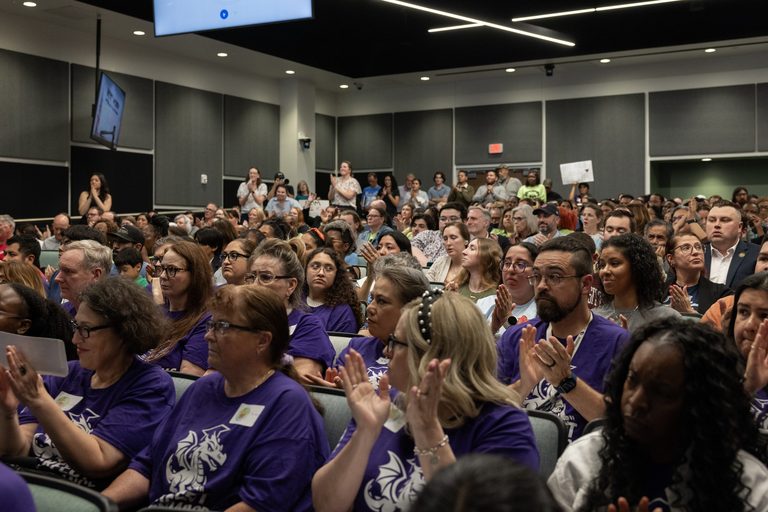
At an August 11 board meeting, Fort Worth Independent School District (FWISD) managers Tennessee Walker and Laurie George publicly apologized for a severe shortage of speech‑language pathologists. The district began the 2026‑27 school year with 32 fewer therapists than needed, a shortfall that followed the elimination of part‑time positions in April.
Background of the cuts
Records obtained by the Fort Worth Report show FWISD cut seven full‑time speech therapists and ten assistant therapists. The cuts were part of a plan to eventually employ 100 full‑time speech‑language pathologists, a model the district hoped would improve service quality. In June, the board approved $700,000 in contracted services to fill immediate gaps, but the hiring effort fell short of expectations.
Impact on students and families
Former part‑time therapist Laura Obuchowski, whose daughter lost her therapy team during the redesign, testified that children rely on long‑term relationships with their therapists. “Our children should not absorb the consequences of poorly made staffing decisions,” she said. Several parents and clinicians were present in the boardroom, underscoring community concern.
District response
Superintendent Peter Licata told the board he will deliver a full report on speech‑language pathologists by the end of August. He acknowledged that FWISD’s salary scale lags $10,000‑$15,000 behind competing districts, though the district’s starting salary of $69,457 remains higher than nearby districts such as Hurst‑Euless‑Bedford and Crowley.
Licata added that the district’s model did not fully account for higher salaries in the private sector, which has made recruitment difficult. He pledged to include retention strategies in the upcoming report.
Expert perspective
Texas Christian University professor Karen Hennington explained that competition for speech‑language pathologists is intense. About half of all professionals work in schools at some point, but many move to higher‑paying hospital or private‑practice roles. The field is projected to grow 15% over the next decade, making the loss of part‑time specialists a risky move.
Hennington noted that once part‑time therapists are cut, they are not easily replaced because they often hold specialized certifications and require a master’s degree plus state licensure.
Voices from within the district
Veteran therapist Max Pell, who has served FWISD for 12 years, said the cuts ignored recommendations that the positions were essential. “It didn’t have to be this way,” he remarked. Christina Sellers, another therapist, pointed out that the department started the previous year with roughly 120 staff members, compared with only 68 on August 10.
Sellers questioned whether a target of 100 full‑time clinicians is sufficient for a growing district, warning that overloaded clinicians can lead to higher turnover and reduced student services.
Next steps
The board’s apology signals a shift toward rehiring the eliminated roles. Walker emphasized accountability, stating, “Now we’re behind the eight ball. That’s on us.” Licata’s forthcoming report is expected to outline concrete steps to attract and retain qualified speech‑language pathologists, aiming to restore full staffing before the next school year.
Original reporting: Fort Worth Report — read the source article.