Stand in the rotunda of the St. Louis Old Courthouse and tip your head back. Above you, four soaring lunette murals sweep across the dome in warm ochres and dusty blues, depicting pivotal scenes from this city’s story — fur traders, Native peoples, westward-bound settlers. The air carries that particular hush you only find in buildings that have witnessed history rather than merely recorded it. This is not a replica. This is not a reconstruction. This is the real thing, and it sits right in the middle of downtown St. Louis, steps from the Gateway Arch, waiting for you to walk through its doors.
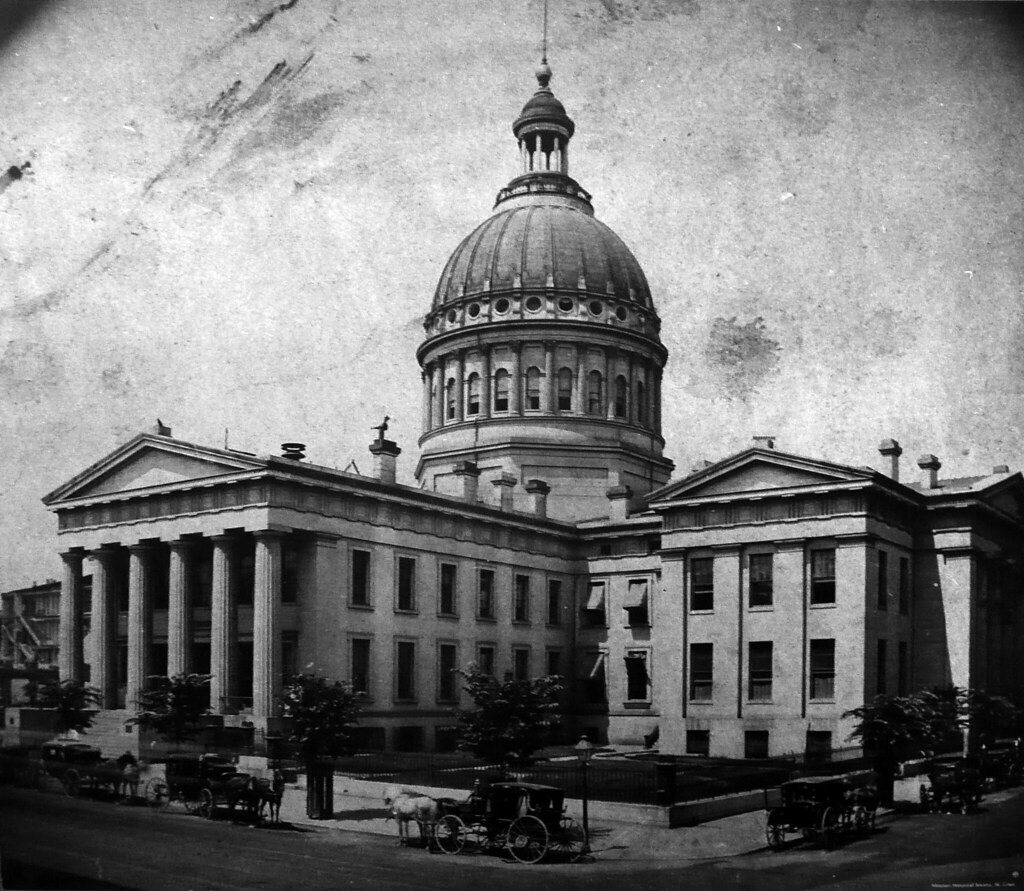
Most visitors who make the trek to the Arch grounds glance at the Old Courthouse, snap a photo of its elegant Greek Revival facade and copper-green dome, and keep moving. That is a genuine mistake. The building that stands at 11 North Fourth Street in downtown St. Louis is among the most consequential courthouses in American legal history, and spending an hour inside it will change the way you think about the country — not in a heavy, lecture-hall way, but in the visceral, immediate way that only original places produce.
This is where Dred and Harriet Scott filed their freedom suits in 1846 and 1847, beginning a legal odyssey that would travel all the way to the U.S. Supreme Court and help ignite the Civil War. The exhibits inside tell that story with remarkable care and without sensationalism — primary documents, personal effects, courtroom reconstructions that feel startlingly intimate. You stand in the actual space where those arguments were heard. That proximity to consequence is difficult to overstate.
Beyond the Scott case, the building served as St. Louis’s civic anchor for decades. It hosted some of the earliest women’s suffrage trials west of the Mississippi. Its grand courtrooms hosted debates that shaped Missouri’s identity as a border state navigating impossible tensions. The architecture itself tells stories — Ionic columns, a cast-iron dome that predates the U.S. Capitol’s current dome, and exhibition galleries that feel airy and welcoming rather than dusty and forgotten.
Admission is free. The building is operated by the National Park Service as part of Gateway Arch National Park, which means it is exceptionally well maintained and staffed by rangers who are genuinely enthusiastic about answering questions. Plan to arrive on a weekday morning if you want a quieter experience, though weekends work perfectly well too.
Combine your visit with a walk across the Arch grounds and a tram ride to the top of the Arch itself, but do not let the Arch overshadow what stands beside it. The Old Courthouse earns its place on any serious St. Louis itinerary — not as a consolation prize, but as an anchor attraction in its own right. History this unfiltered, this accessible, and this free is rarer than it should be. St. Louis is lucky to have it, and so are you.