Delaware Attorney General Kathleen Jennings filed a civil complaint Thursday in the Court of Chancery, alleging that Glock, Inc. and its Austrian parent, Glock Ges.m.b.H., have ignored a long‑standing design vulnerability that allows criminals to attach illegal conversion devices—often called “Glock switches” or auto sears—to the company’s pistols.
Allegations and Legal Claims
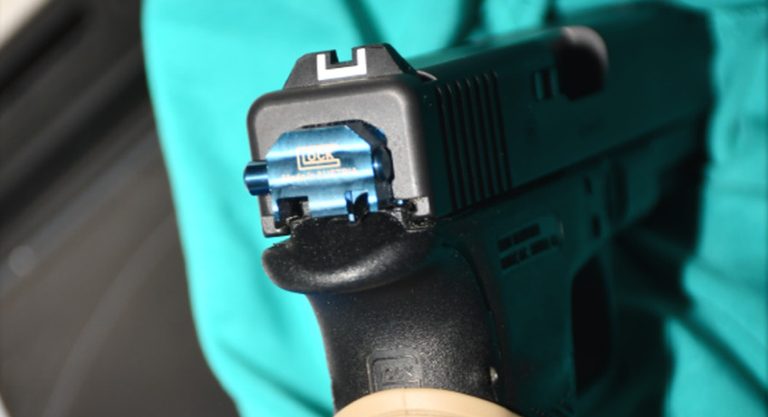
The 82‑page complaint asserts five causes of action, including statutory public nuisance under Delaware’s firearm accountability law, common‑law public nuisance, and claims that Glock aided and abetted illegal possession of machine guns. State officials argue that the standard mechanical design of Glock handguns permits users to replace the slide cover plate with a nickel‑sized metal or plastic device that modifies the trigger bar, enabling continuous fire at rates up to 1,200 rounds per minute.
Design Vulnerability Dates Back Decades
According to the suit, Glock has known about this vulnerability since 1987, when the switch’s inventor demonstrated a prototype to founder Gaston Glock. The AG’s office says the company has refused to implement basic safeguards—such as permanently fixing the rear slide plate or redesigning the internal drop‑safety system—citing an “unwillingness to incur extra manufacturing costs.”
Rising Threat Highlighted by Federal Data
Federal data from the Bureau of Alcohol, Tobacco, Firearms and Explosives show a 570% increase in recovered conversion devices between 2017 and 2021. In 2024 alone, 3,769 such parts were seized nationwide. Delaware also points to local incidents, including 3D‑printed switches found in Camden and Newark, a modified weapon seized during a traffic stop, and an April 2022 shooting that wounded three people after a switch‑equipped pistol was used.
State’s Request for Court Relief
Delaware is seeking an injunction that would bar Glock from selling handguns that can be easily converted to fully automatic fire to Delaware civilians. The complaint also requests public‑nuisance abatement funded by the company, restitution, disgorgement of profits, and punitive damages. The lawsuit does not seek to halt Glock sales to law‑enforcement agencies.
Attorney General’s Statement
“For decades, some gun manufacturers have hidden behind the myth that their industry has no moral consequences,” Jennings said. “Our communities are being terrorized by weapons with destructive power never intended or legal for civilian use. Glock knew. They could have acted. They chose profit over people.”
Broader Context
The filing follows similar actions by Chicago, Baltimore, Seattle, Minnesota and New Jersey, reflecting a growing wave of state‑level efforts to hold firearm manufacturers accountable for designs that facilitate illegal conversion. While Glock argues that it does not manufacture the conversion devices themselves, the state contends that the company’s failure to redesign its pistols makes the illegal market thrive.
Potential Impact
If the court grants the injunction, Glock would need to redesign its handguns sold to Delaware civilians or face ongoing litigation costs and damages. The case also underscores the tension between gun‑rights advocates, who argue that such lawsuits infringe on lawful gun ownership, and public‑safety officials, who view the conversion kits as a clear and present danger to communities.
Original reporting: Tampa Free Press — read the source article.