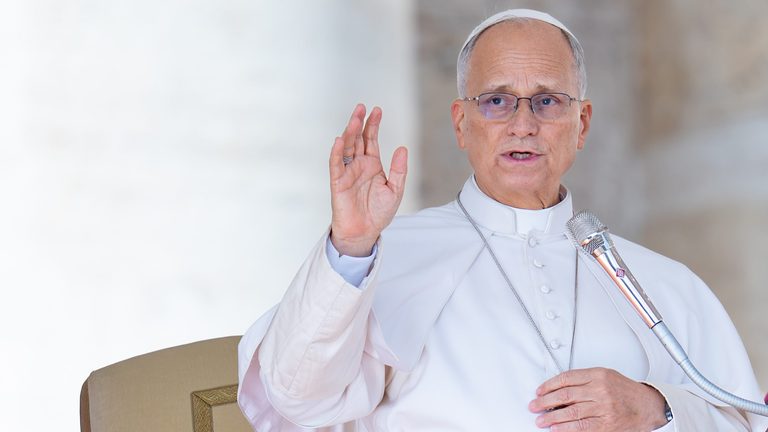
Pope Leo XIV used a video address, recorded from his hospital after lung‑cancer surgery, to reinforce a core Christian teaching: there is no such thing as a holy war. The message was broadcast to an interfaith assembly in Assisi, the Italian hill town famed as the birthplace of St. Francis, where religious leaders from across the globe gathered to mark the 40th anniversary of a historic meeting called by St. John Paul II.
Peace, not war, is holy
“Only peace is holy,” the Pope said, adding that war “can never be waged in the name of God.” He warned of a “troubling revival of war as an instrument of international politics” and urged participants to cultivate the spirit of Assisi, a symbol of humility and reconciliation.
Religious justification for conflict condemned
The Pope’s remarks directly challenged recent claims by various actors that invoke faith to legitimize armed conflict. He cited Russia’s Orthodox Church, which has framed the invasion of Ukraine as a holy war, and noted that leaders on all sides of the Iran conflict have similarly used religion to justify violence. Even U.S. officials, including Defense Secretary Pete Hegseth, have occasionally framed wars as a Christian nation defending its values.
Leo reminded listeners that fighting in the name of religion “means attacking religion itself,” echoing the language of his first encyclical, Magnificent Humanity.
Humanitarian outreach to Ukraine
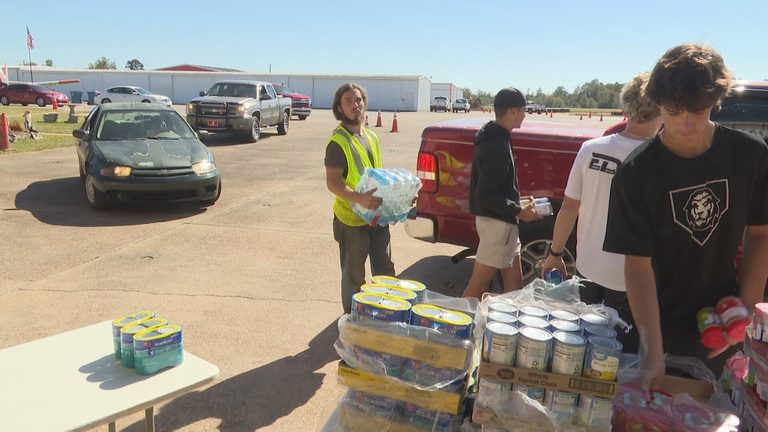
While the Pope’s message focused on moral teaching, the Vatican’s humanitarian effort continued on the ground. Monsignor Luis Marín de San Martín, the Pope’s chief almsgiver, began a three‑day mission to Ukraine, delivering trucks of winter clothing, blankets, and food to Kyiv. He also planned visits to Zaporizhzhia, Dnipro, and Fastiv to assess needs directly and convey the Holy Father’s concern to “real people, real faces.”
Earlier, the Pope had called for a cease‑fire and safe, voluntary evacuation of civilians in the southern city of Oleshky during a phone call with Russian President Vladimir Putin. Three days later, he followed up with Ukrainian President Volodymyr Zelenskyy, expressing hope that cooperation would allow the delivery of food and medical aid and the safe evacuation of civilians.
Assisi’s legacy of interfaith dialogue
The gathering in Assisi continued a tradition of interreligious peace‑building that began under St. John Paul II. That 1986 meeting, controversial at the time for bringing together leaders of different faiths in prayer, sparked a global movement of interfaith appeals for peace. This year’s assembly reaffirmed that legacy, emphasizing that true peace requires cooperation beyond doctrinal differences.
Participants included Archbishop of Canterbury Sarah Mullally, representing the worldwide Anglican Communion, as well as Muslim, Buddhist, and other Christian leaders. Their presence underscored a shared commitment to reject the misuse of faith for violent ends.
Looking ahead
As the Pope recovers, his message reinforces a timeless Christian principle: the sanctity of peace over the false promise of holy war. By coupling moral exhortation with concrete humanitarian aid, the Vatican seeks to demonstrate that faith, when properly lived, is a force for compassion and reconciliation, not conflict.
Original reporting: NBC6 Miami — read the source article.