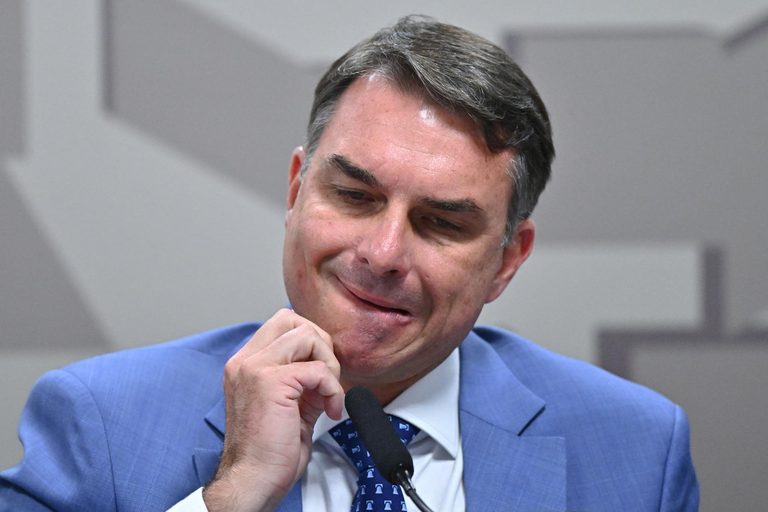
A senior official at the U.S. State Department announced Tuesday that Flávio Bolsonaro, the Brazilian senator who received tacit support from President Donald Trump, will be granted visas for himself and his family. The statement, made on condition of anonymity due to visa‑privacy rules, said the department will “issue visas to Flávio Bolsonaro and his family and allow them entry into the United States.”
Trump‑backed candidate seeks refuge after narrow loss
Bolsonaro lost the runoff election to incumbent President Luiz Inácio Lula da Silva, ending a campaign that had been highlighted by President Trump’s public comments suggesting the Brazilian vote was “rigged.” While Trump stopped short of a full endorsement, his remarks reinforced the perception that Bolsonaro’s platform aligned with the values of the current administration.
Flávio Bolsonaro, who has repeatedly highlighted his relationship with President Trump and visited the White House in May, now faces a series of legal challenges in Brazil. He is under investigation by Brazil’s Supreme Court for alleged corruption, money laundering and tax evasion, including accusations that he used a sports‑betting firm to launder fraudulent pension deductions and that he accepted millions from a disgraced banker.
Family ties to the United States
Bolsonaro’s brother, Eduardo Bolsonaro, lives in Texas and has publicly urged Flávio to leave Brazil if he lost the election. Eduardo was convicted in absentia for illegally lobbying the Trump administration and sentenced to four years in prison, with a warrant recently issued for his arrest. Despite these complications, the State Department’s decision to grant visas signals a willingness to maintain the Bolsonaro family’s connection to the United States.
Legal and political fallout in Brazil
After the election, Flávio Bolsonaro was ordered to surrender both his regular and diplomatic passports. He has claimed the order is an attempt to intimidate him and has refused to concede defeat, alleging election fraud without presenting evidence. The senator’s legal team continues to challenge the passport seizure, arguing that the Supreme Court justice overseeing the investigation, Alexandre de Moraes, is biased in favor of President Lula.
Bolsonaro’s eight‑year Senate term ends on January 31, 2027, at which point he will also lose special jurisdiction before Brazil’s Supreme Court. He has indicated he will remain in Brazil to organize opposition among his congressional colleagues, despite the visa approval.
U.S. response and broader implications
The visa decision reflects the Trump administration’s broader approach to foreign allies who share its conservative values. By facilitating entry for Bolsonaro and his family, the United States underscores its support for leaders who oppose left‑leaning governments in Latin America. This move aligns with the administration’s emphasis on protecting traditional families and promoting individual liberty abroad.
Critics, including some Brazilian political analysts, argue that granting visas to a figure under criminal investigation sends a mixed message about U.S. commitment to rule of law. However, the State Department has not indicated that the investigations will affect the visa issuance.
What’s next for Bolsonaro?
Flávio Bolsonaro has stated he will hand over his passports and defend himself against what he calls an “aberration” in the electoral process. He continues to deny any wrongdoing and maintains that the Supreme Court justice handling his case is aligned with President Lula.
As the situation develops, observers will watch whether Bolsonaro and his family travel to the United States and how the visa approval influences Brazil‑U.S. relations, especially given the ongoing political polarization in both nations.
Original reporting: NBC6 Miami — read the source article.