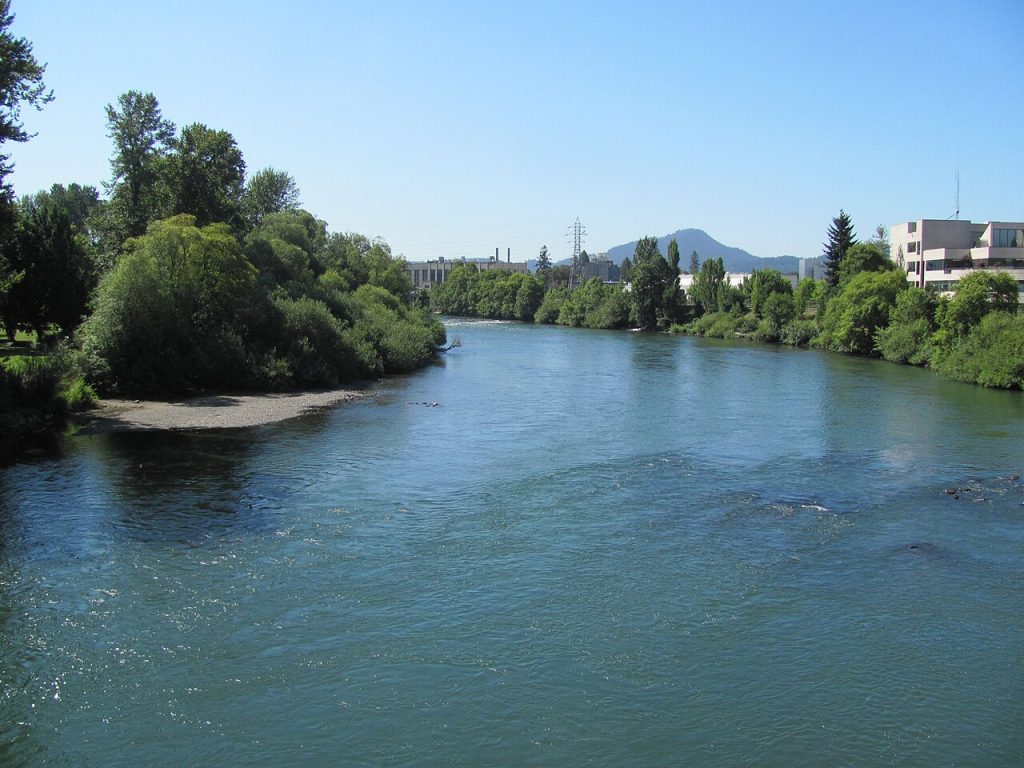
If you’ve lived in Eugene more than a month, someone has probably told you to just take the river path. They weren’t being vague — they meant the paved multi-use trail that traces the Willamette River through town, connecting Alton Baker Park on the east side through downtown and out toward the Owosso Bridge and beyond. The full corridor, counting spur connections, runs well over 15 miles, though most people ride or walk a stretch and double back.
The best entry point depends on where you’re starting from. If you’re coming from the University area or Autzen Stadium, drop in at Alton Baker and head west across the DeFazio Pedestrian Bridge — that footbridge crossing alone is worth the trip, especially when the river is running high in spring. From downtown, you can pick up the path near Skinner Butte and ride south along the river’s edge, past the boathouse and the scullers who are almost always out early on calm mornings. If you want a longer loop, cross over the Greenway Bridge into Springfield, ride that side, and come back — different views, less traffic, good pavement.
The surface is smooth asphalt for most of the route, which makes it manageable on a road bike, a cruiser, or inline skates. You’ll share the path with joggers and dog walkers, and on weekend afternoons in summer it gets genuinely crowded near the DeFazio Bridge, so go before 9 a.m. or after 6 p.m. if you want to move at your own pace. On weekday mornings, stretches of it feel practically empty.
There’s no admission cost — it’s a city park trail. Parking is free at Alton Baker off Day Island Road. You can also lock up near the Valley River Center mall and access the path from the north side of the river if that’s closer for you. Eugene’s bike share program (PeaceHealth Rides) has docking stations near the path if you don’t have your own wheels; a day pass runs around $10 and short rides are included.
A few practical things worth knowing: restrooms are available at the Day Island parking area and at Skinner Butte Park. There are no food vendors on the path itself, but the route passes within a few blocks of several coffee shops and sandwich spots if you’re piecing together a longer morning. The path is lit at night in some sections but not all, so bring a light if you’re riding after dark. Dogs are welcome on leash.
What separates this from a generic riverfront path is how much of the actual city you move through. You’ll pass under highway bridges and through quiet grassy stretches within a half-mile of each other. Blue herons are a constant — they fish the shallows at the same spots year-round. In fall, the cottonwoods along the bank turn yellow and the light goes amber in the late afternoon in a way that makes it look like somebody put a filter on the whole river.
You don’t need a plan. Pick a direction, ride until you feel like stopping, turn around. That’s mostly what people do.