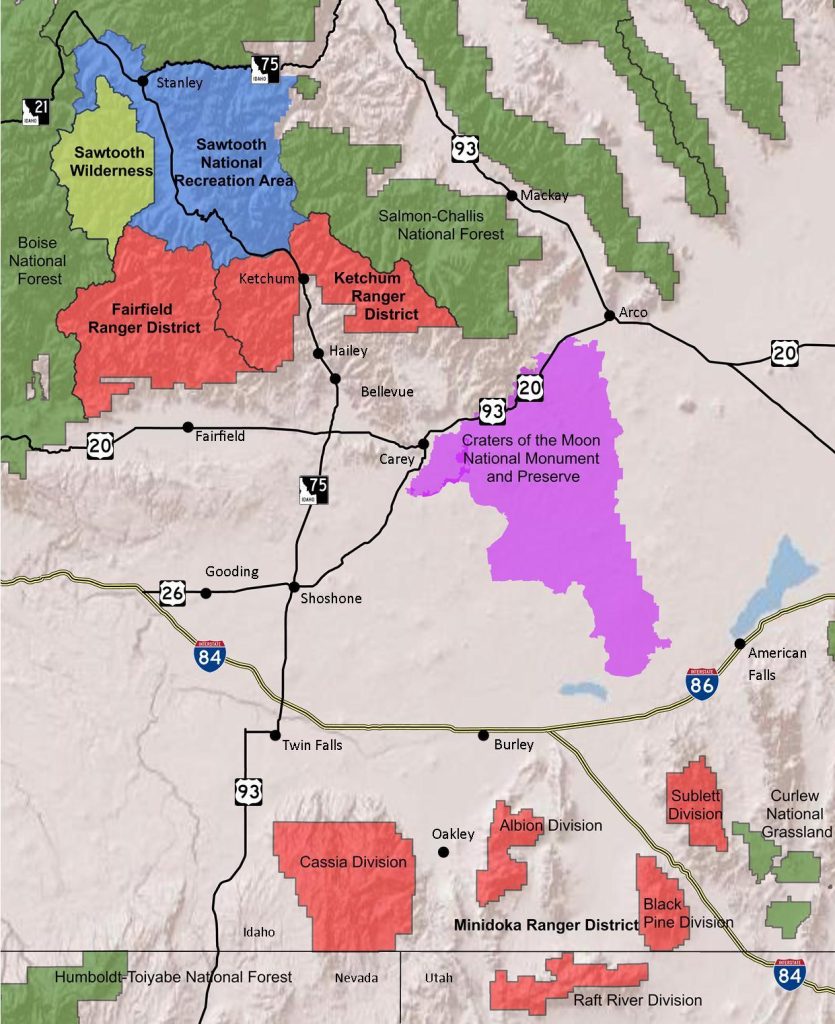
There are road trips you take because you feel obligated, and then there are road trips that rewire something in your brain. The drive from Boise out to Craters of the Moon National Monument & Preserve — about two and a half hours east along Highway 20 — falls firmly into the second category. The moment the landscape starts shifting from sagebrush flats to black, buckled lava fields stretching in every direction, you will pull over just to stare. That is not a suggestion. It is simply what happens.
Craters of the Moon sits in the high desert of south-central Idaho, covering more than 750,000 acres of volcanic terrain that looks, with complete sincerity, like the surface of another planet. NASA has actually used the area to train astronauts, which tells you something about the scale and strangeness of the place. Ancient lava flows, cinder cones, spatter cones, lava tubes, and fields of obsidian glass stretch to the horizon in every direction, all of it formed by volcanic activity that took place as recently as 2,000 years ago in geological terms — practically yesterday.
The monument is managed jointly as a National Monument and a National Preserve, and the NPS has done a thoughtful job building out a seven-mile loop drive that hits the major highlights without demanding technical hiking. Pull off at the Inferno Cone viewpoint and walk about ten minutes to the summit for a panorama that is genuinely difficult to photograph well because no image can convey the immensity of it. The lava stretches so far and so flat that the curve of the Earth feels almost visible.
For those who want to go deeper — literally — the lava tube caves are unmissable. Indian Tunnel is the largest, and you can walk through it without any special gear beyond a flashlight or headlamp and shoes with decent grip. The smaller caves like Beauty Cave and Boy Scout Cave require crawling and a higher tolerance for the dark, but they reward the adventurous with chambers of absolute silence and formations that look like something from a science fiction novel.
Wildflowers bloom in spring and early summer in the most unexpected pockets of soil between lava rocks, and the stargazing after dark is extraordinary — the monument is designated as an International Dark Sky Park, meaning light pollution is minimal and the Milky Way is not a metaphor but an actual visible band of light above your head.
From Boise, this makes for an excellent day trip or a relaxed overnight if you camp at the monument’s Lava Flow Campground (reservations recommended in summer). Pack water, real sun protection, and sturdy shoes. The black lava absorbs heat aggressively on summer afternoons, and the terrain is uneven enough that flip-flops will genuinely make you regret your choices.
What makes Craters of the Moon so special is not just that it looks alien — it is that it is undeniably, geologically, profoundly real. This is Idaho’s own volcanic landscape, shaped over millennia, accessible for a day, and capable of making even the most seasoned traveler feel genuinely small in the best possible way. Make the drive. You will be thinking about it for years.