A Chicago man, Diego Emmanuel Reyes, was indicted after video surfaced showing his SUV striking an ICE officer’s pickup during Operation Midway Blitz on the Southwest Side on Oct. 4, 2025. Federal officials, including U.S. Attorney Andrew Boutros and FBI special agent-in-charge Douglas DePodesta, have publicly condemned the attack and pushed for accountability in federal court in Chicago. The indictment charges Reyes with assaulting, impeding, intimidating and interfering with a federal agent and includes an enhanced penalty for use of a deadly or dangerous weapon. The case has reopened a blunt national conversation about violent resistance to law enforcement during immigration operations.
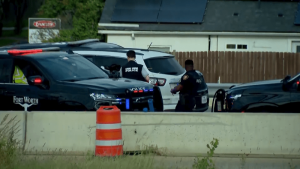
The newly released footage reportedly captures the moment Reyes drove his SUV into the rear of an ICE pickup while the officer was carrying out official duties. Prosecutors allege the collision wasn’t accidental: after the initial impact, Reyes allegedly accelerated and shoved the pickup forward, increasing the danger to the federal agent. Those actions, if proven, cross a clear line from protest into violent criminal conduct. For communities that rely on predictable law enforcement, this kind of behavior can’t be normalized.
Federal prosecutors moved quickly to bring a grand jury indictment, charging Reyes with crimes that carry serious penalties—up to 20 years behind bars for assaulting and obstructing a federal agent. The indictment also stresses the use of an SUV as a deadly or dangerous weapon, which increases the potential punishment under federal law. Lawmakers and prosecutors who favor firm enforcement welcome such enhanced penalties when they’re applied to attacks on officers. The message from the U.S. Attorney’s Office is straightforward: federal officers operating lawfully will be protected by the full force of the law.
U.S. Attorney Andrew Boutros left no doubt about how his office sees the incident. “What this defendant did … was a dangerous and brazen act of violence against a federal agent as well as an attack on the rule of law,” he wrote in a statement. That language reflects a Republican-leaning law-and-order stance: when federal agents are targeted while doing their jobs, the response should be firm and public. If the goal of justice is deterrence as much as punishment, high-profile prosecutions like this one serve both purposes.
Douglas DePodesta of the FBI’s Chicago Field Office echoed the call for accountability and warned that federal resources will be used against those who interfere with officers. “The Chicago Field Office has zero tolerance for anyone impeding federal officers engaged in their lawful functions,” DePodesta said, noting that the FBI will use all available resources against those who undermine the rule of law. That kind of coordination between federal prosecutors and investigative agencies is what the system is built for, especially when an assault involves a vehicle used as a weapon.
Operation Midway Blitz has been controversial, both for its focus and for the increased risk agents face when conducting enforcement sweeps in volatile neighborhoods. Federal agencies say the operation was necessary to carry out immigration laws, while critics point to the broader immigration debate and community relations. What should be noncontroversial, though, is the principle that violence against officers is a crime, not a political act with special protections. Upholding that principle is essential to maintaining public safety and the rule of law.
The indictment lists both the core obstruction offenses and the enhancement tied to the deadly-weapon allegation. That enhancement can meaningfully change the stakes for Reyes if convicted, raising the statutory maximum and affecting plea dynamics. Defense lawyers often contest weapon enhancements, but prosecutors will argue that using a vehicle to strike a law enforcement officer is precisely the conduct those rules were meant to punish. In federal court, the optics and the legal theory both matter.
An arraignment date in Chicago federal court has not yet been scheduled, leaving open the timeline for pretrial motions and discovery that will follow. As the case moves forward, expect federal prosecutors to emphasize the video evidence and the alleged sequence of events. Expect defense counsel to challenge intent and to scrutinize the circumstances of the operation itself. Meanwhile, public commentary will likely split along familiar lines: those insisting on strict accountability for attacks on officers, and those arguing broader immigration policy and enforcement practices deserve scrutiny.
This case is a stark reminder that enforcement work can be hazardous, and that violence aimed at federal officers carries heavy consequences. Chicago will watch closely as the prosecution unfolds, and federal partners in Washington will watch how local courts handle the enhanced-penalty arguments. For officials who support robust enforcement, the indictment is an important demonstration that attacks on law enforcement will be met with swift legal action and significant penalties.