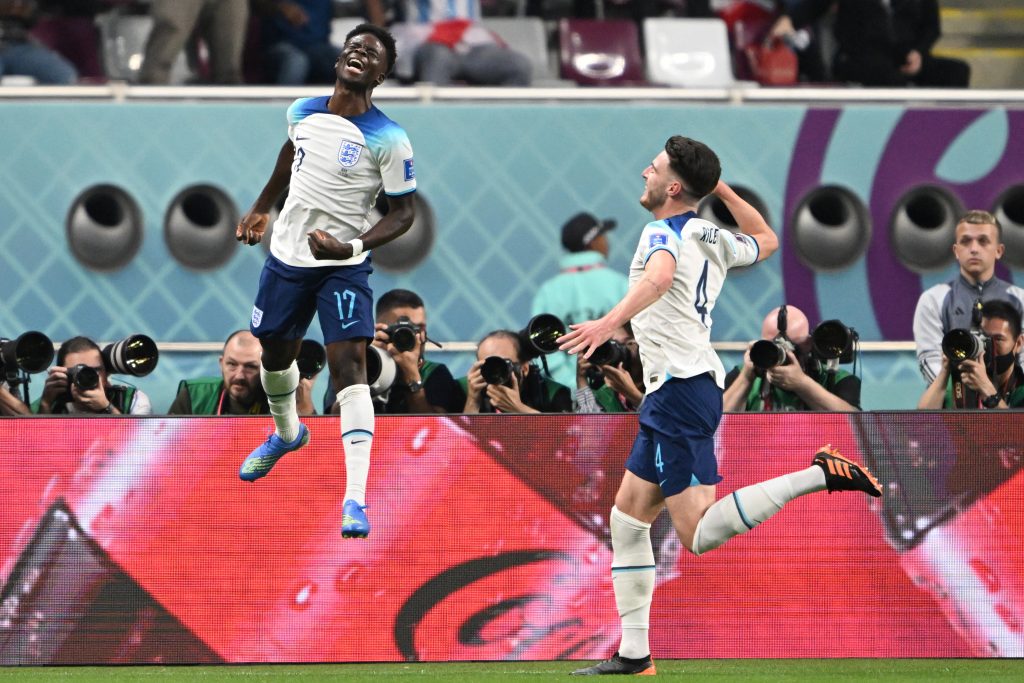
The English national team has announced its 2026 World Cup roster that mixes proven stars and rising talent from top European clubs, listing names like Bukayo Saka, Declan Rice, Eberechi Eze, and Noni Madueke from Arsenal and elsewhere, and even flagging big exports such as Barcelona’s Marcus Rashford, Bayern Munich’s Harry Kane, Real Madrid’s…. The squad draws heavily on the Premier League while also reflecting England’s players scattered across Europe, and it comes with clear tactical ideas and selection questions heading into the tournament.
Right away the balance between youth and experience stands out. Bukayo Saka and Eberechi Eze bring creativity and directness to the attack, while Declan Rice remains a midfield stabilizer who can protect the back line and start transitions. Noni Madueke offers width and pace that can unsettle slower defenses, giving the manager multiple ways to open games.
There’s a notable club representation conversation to have. Arsenal provides four names, signaling the club’s domestic strength translating into national team influence, while players at Barcelona, Bayern Munich, and Real Madrid suggest England’s talent is competitive at the highest continental level. That spread matters for chemistry; domestic teammates can slot in quickly, but continental experience brings big-game seasoning.
On paper the forward group reads like a mix of traditional strikers and mobile attackers who can rotate positions. Harry Kane’s presence, listed with Bayern Munich, anchors the unit with finishing and hold-up play, while Marcus Rashford’s role at Barcelona implies a player used to varied attacking systems. That combination gives the coach options to either build through a central striker or overload wide areas depending on the opponent.
The midfield will feel the pressure to connect phases cleanly and protect the defense. With Declan Rice in the engine room, ball-winning and tempo control should be priorities, but England will also need ball progressors to break midblocks. How players such as Eze are used into pockets between the lines could determine whether England dominates possession or relies on quick breaks.
Defensively there are questions about depth and adaptability. The starters might look solid on paper, but tournaments expose fatigue and injury vulnerabilities. England’s back line will need to be comfortable against physical teams and sharp when facing quick, technical attackers, so set-piece organization and communication will be tested early in squad play.
Goalkeeping choices shape tournament confidence, and whoever starts must be steady under pressure. Clean distribution from the back remains important to England’s overall style, and the keeper will be part of building from the back against teams that press aggressively. Penalty resilience and one-on-one form will also matter if knockout rounds go to fine margins.
Tactical flexibility could be England’s real asset if the manager uses it well. Switching from a possession-based 4-3-3 to a 3-4-3 or a more direct 4-2-3-1 can help neutralize specific threats, and the mix of Arsenal-trained players with those from Spain and Germany provides personnel who have operated in different systems. The challenge is ensuring everyone understands their roles without losing the team’s identity.
Fitness and form at tournament kickoff will likely decide much of the outcome. A World Cup demands peak condition across seven or more tough matches, and clubs’ end-of-season schedules can leave players drained. England’s medical and conditioning staff will need to manage load carefully to avoid last-minute roster headaches.
Fan expectations are high whenever England enters a World Cup, and that pressure cuts both ways. Supporters want progress in knockout rounds, but the squad’s mix of homegrown stars and continental standouts sets up realistic chances to go far. How the players respond under noise, travel demands, and tactical tests will shape not just match results but perceptions of the selection itself.
Ultimately the roster is a snapshot of English football’s current crop: talented, exported, and carrying big hopes. The names announced—Bukayo Saka, Declan Rice, Eberechi Eze, Noni Madueke—plus players tied to Barcelona, Bayern Munich, and Real Madrid give the team a contemporary feel and multiple tactical paths. The next steps are about cohesion, fitness, and whether the collective can outperform the sum of its parts on the world stage.