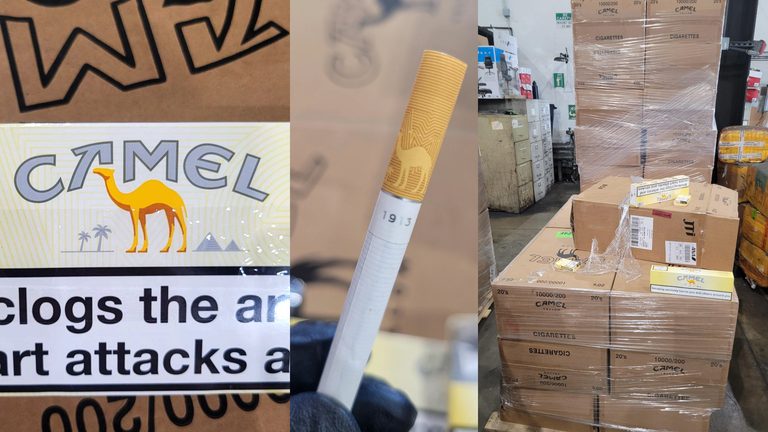
U.S. Customs and Border Protection (CBP) officers at Washington Dulles International Airport intercepted a shipment of counterfeit Camel cigarettes on August 14, preventing more than $400,000 in potential tax loss and protecting public health.
How the shipment was discovered
The cargo arrived at Dulles on July 11 after traveling from Singapore through Japan. It was labeled as 45 boxes of “Camel Yellow Cigarettes” destined for an address in Miami. Each box contained 50 cartons, for a total of 2,250 cartons.
During routine inspection, CBP agents noticed an unusual logo design, irregular markings, and a routing pattern that did not match legitimate Camel shipments. Trade experts at the agency consulted R.J. Reynolds Tobacco Company, the trademark holder for Camel, which confirmed the products were counterfeit.
Impact on consumers and government revenue
Christine Waugh, CBP’s Area Port Director for Washington, D.C., explained that counterfeit cigarettes not only deprive the United States of tax revenue but also pose a serious health danger. Smokers of fake products cannot know what chemicals they are inhaling, increasing the risk of harmful exposure.
CBP estimates that, if authentic, the seized cartons would have retailed for $404,842. The agency notes that counterfeit goods undermine trademark owners, reduce government revenue, and can fund transnational criminal organizations.
Broader enforcement context
During fiscal year 2025, CBP officers and Homeland Security Investigations special agents seized nearly 78.4 million shipments that violated intellectual‑property rights. Had the seized cigarettes been genuine, their combined retail value would have exceeded $7.4 billion.
The successful seizure underscores the importance of vigilant customs enforcement in protecting both the economy and public health from illicit trade.
Original reporting: Arlington County | FOX 5 DC — read the source article.