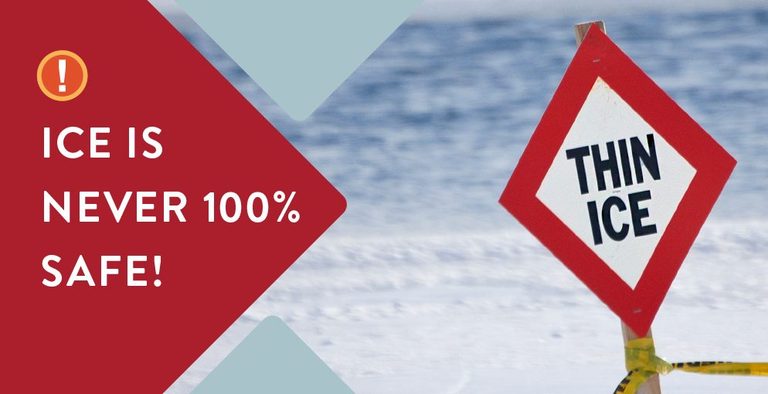
With winter approaching and temperatures dropping across North Dakota, the National Weather Service (NWS) office in Bismarck is issuing a timely reminder about the hidden dangers of thin ice on lakes and ponds. While ice fishing, skating and walking on frozen water become tempting pastimes, the agency stresses that ice does not freeze uniformly and can be deceptive.
Know the ice before you step onto it
The NWS outlines basic thickness guidelines for clear, new ice: at least 4 inches for walking, 5 inches for snowmobiles, 7 inches for a small car, and 12 inches for a medium‑sized vehicle. These numbers are only guidelines, not guarantees of safety, because ice can vary considerably even within a single body of water.
Factors that make ice unsafe
Snow cover is a major complicating factor. Snow acts as an insulator, slowing the freezing process, and it can hide cracks, weak spots and open water beneath the surface. Additionally, ice near submerged objects such as trees, brush, or shoreline structures, as well as areas with moving water, tends to be weaker, according to the North Dakota Game and Fish Department.
Practical safety steps
Anyone planning to venture onto frozen water should check conditions frequently and avoid areas with visible cracks, melting ice or flowing water. The NWS recommends carrying an ice pick, a reliable method for measuring ice thickness, and a cellphone for emergencies. Going onto the ice alone is strongly discouraged.
If you fall through
Should someone break through the ice, the agency advises staying calm, turning back toward the direction you came from, and using your arms and ice pick to pull yourself onto solid ice. Once on the surface, roll away from the opening rather than standing up immediately.
If another person falls through, do not rush onto the ice yourself. Instead, reach the victim with a long object, throw a rope or flotation device, and call 911 for professional assistance.
When in doubt, stay ashore
The core message from the National Weather Service is simple: if you are unsure whether the ice is safe, do not go out. More detailed winter safety resources are available through the NWS website and the North Dakota Game and Fish Department’s ice safety guidelines.
By taking these precautions, North Dakota residents can enjoy winter recreation while protecting themselves and their families from the hidden hazards of thin ice.
Original reporting: WOWO News/Talk (Fort Wayne) — read the source article.