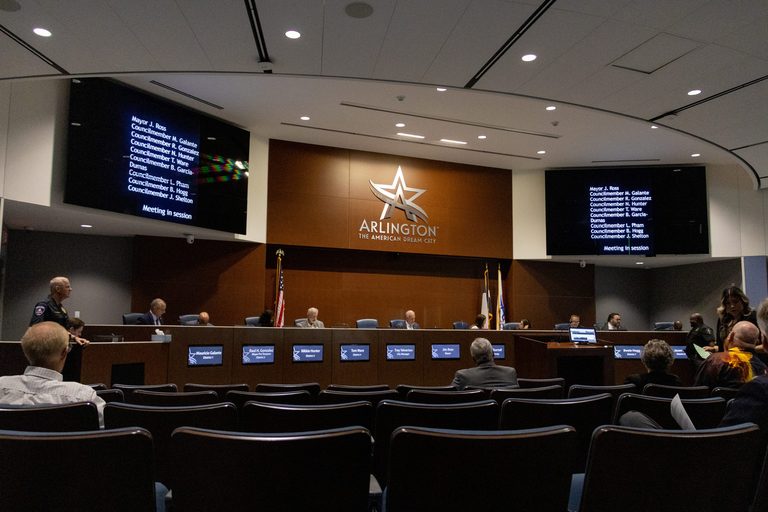
In a unanimous vote Tuesday night, the Arlington City Council designated a portion of east Arlington as a Neighborhood Empowerment Zone. The move allows the city to waive about $550,000 in development fees for a new workforce housing project known as The Knox.
What the zone accomplishes
Council members approved the zone to help close a funding shortfall estimated between $1.8 million and $2.3 million for the two‑phase, mixed‑income development. The Knox will provide 82 multifamily units and 69 senior units for low‑income families, built off South Watson Street near Carl Knox Jr. Park.
City officials explain the decision
Troy Williams, Arlington’s director of Community Development, said the zone is intended to spark long‑term benefits for the surrounding area, even if the immediate fee waiver does not cover the entire gap. “Just trying to bring some new energy to that area,” Williams told council members, noting that the waived fees could be recouped through future development activity.
City Manager Trey Yelverton added that the development plan will be reviewed by the Planning and Zoning Commission on Nov. 18. He emphasized that while the fee waiver does not solve the entire funding shortfall, it demonstrates the city’s willingness to facilitate private investment in a part of town that needs revitalization.
Background on the project
The Knox began its path in August 2025 when council members approved a zoning request that changed roughly six acres from commercial to multifamily use. Structure Development, an Austin‑based developer, submitted the request and later identified additional parcels—including a car wash that could become a community amenity—to expand the project’s footprint.
Structure Development has committed about $17.4 million in Low‑Income Housing Tax Credit equity to the project, with an additional $24.4 million pending through construction and permanent loans. The city’s fee schedule, recently updated to reflect actual service costs, would have generated roughly $550,000 in fees for the Planning and Development Services department.
Alternative financing options considered
During a June 2026 committee presentation, officials outlined other ways to address the funding gap, including partnering with the developer to apply for HUD grants, using the city’s venture capital fund, or seeking low‑interest loans from local banks. The council ultimately chose the empowerment zone because of its potential to encourage both residential and commercial redevelopment along the corridor.
Council members voice concerns and support
Councilmember Raul Gonzalez raised a constituent’s worry that the fee waiver might amount to giving money away. “We’re not just giving money away to these people, and they’re becoming rich,” Gonzalez said, stressing that the city’s actions aim to improve the neighborhood for all residents.
Other council members expressed optimism that the zone will attract further investment and create a gateway into the city’s eastern corridor. “Essentially, we are looking at the opposite end of the corridor and also looking at a gateway into the city,” Williams added.
Looking ahead
The city will continue to monitor the project’s financing and progress. Yelverton noted that the developer will pursue the tax‑credit process with the state and explore additional savings to offset remaining costs. “We know there’s a notable gap, and this doesn’t solve the gap, but it shows the city is willing to help facilitate, in some way, investment in this part of town,” he said.
Arlington’s use of the Neighborhood Empowerment Zone mirrors a similar action in May 2021, when the council created a zone for the Kestrel on Cooper affordable‑housing project, which faced a $1.2 million funding gap.
Original reporting: Fort Worth Report — read the source article.