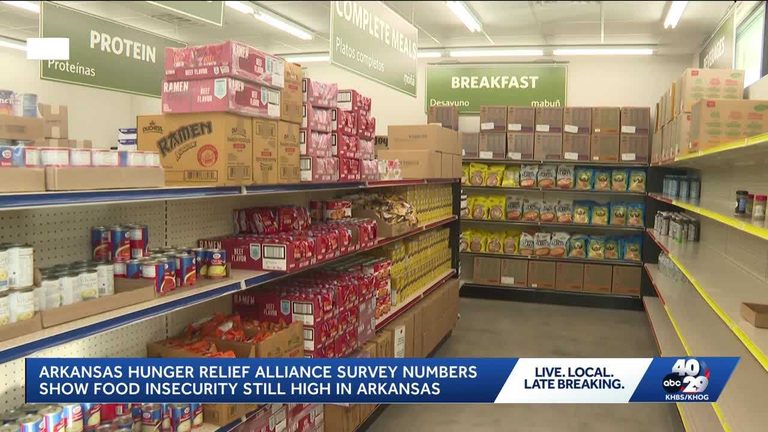
The Arkansas Hunger Relief Alliance, based in Little Rock, released the results of its biennial food‑security survey on Monday. The study, which gathered responses from more than 5,000 residents across the state, found that 37 % of Arkansans reported not having enough food to meet their needs in 2025. That percentage translates to roughly 1.14 million people facing hunger or inadequate nutrition.
Working families still struggle
One of the survey’s most striking findings is that food insecurity is not limited to households without employment. A significant share of respondents who reported insufficient food also said that someone in their household works a full‑time job. This underscores how rising food prices are eroding the purchasing power of even steady earners.
Elijah Hayden, marketing and development coordinator for the River Valley Regional Food Bank, said the organization is seeing the impact of those price increases firsthand. “The average price of food in both of our regions has increased. It’s across the board,” Hayden explained. He added that food banks are seeing higher demand for emergency assistance while also confronting larger, more chronic needs.
Food banks designed for emergencies, not long‑term reliance
Sylvia Blain, CEO of the Arkansas Hunger Relief Alliance, reminded readers that food banks were originally intended as temporary safety nets. “Food banks were never intended to be a way of life. They were intended to be emergency assistance,” Blain said. “We’re in a situation now where we have people who are chronically food insecure.”
Blain emphasized that the Alliance plans to use the survey data to advocate for policies that address the root causes of hunger, such as inflation, supply‑chain disruptions, and inadequate wages. The organization intends to repeat the survey every two years to track trends and measure the effectiveness of any interventions.
What families can do
Local churches, civic groups, and families are encouraged to support food‑bank initiatives through volunteerism and donations. Many faith‑based organizations in Arkansas already partner with the Alliance to distribute meals and provide nutrition education. Parents are also urged to explore federal nutrition programs like SNAP, which can help stretch limited household budgets.
Community leaders say that a coordinated response—combining charitable assistance, responsible budgeting, and policy reforms—offers the best chance of reducing the number of Arkansans who go to bed hungry.
Looking ahead
The Arkansas Hunger Relief Alliance’s findings arrive at a time when state legislators are debating measures to curb inflation and improve wage growth. While the survey does not attribute the hunger crisis to any single policy, it provides a clear data‑driven picture of a problem that affects families of all backgrounds.
As the Alliance prepares its next report, officials and citizens alike are being asked to consider how to strengthen the social safety net without creating long‑term dependency. The hope is that by shining a light on the scale of the issue, Arkansas can move toward solutions that uphold the dignity of every household.
Original reporting: 40/29 / KHBS (NW Arkansas) — read the source article.