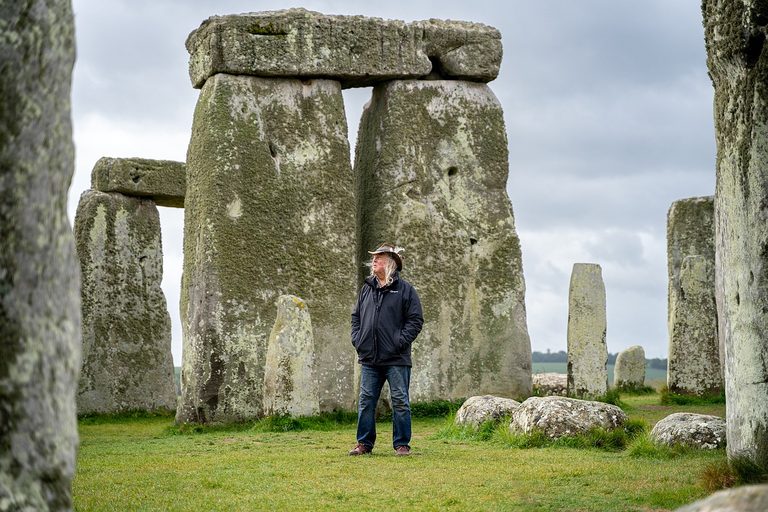
Archaeologists have made a significant discovery near the prehistoric stone circle of Stonehenge in southern England. A team from the British firm Wessex Archaeology has unearthed a structure that may have served as a ‘prototype’ for the 5,000-year-old Neolithic monument.
The Discovery
The structure, which consists of two wooden poles 120 meters apart, is aligned to point directly at the rising sun during the summer solstice and the setting sun at the winter solstice. Researchers believe that this structure predated Stonehenge by around 500 years.
The team, led by archaeologist Phil Harding, made the discovery as part of archaeological work to support the British defense ministry’s program to accommodate troops who have been withdrawn in recent years from Germany. The area around Stonehenge is one of the largest military training grounds in the UK.
Harding, 76, said the site was likely to have been a focus for major religious gatherings. ‘Opportunities like this probably only come once in a career, in a lifetime,’ he said. ‘I’m probably towards the end of my career now, but thank God I’m still in archaeology long enough to be part of this discovery, because it’s certainly the highlight of my career.’
Significance of the Discovery
The discovery provides new insights into the history and significance of Stonehenge, which is a symbol of British culture and history. The site’s meaning has been the subject of vigorous debate, with the most generally accepted interpretation being that it was a temple aligned with the movements of the sun.
English Heritage said other theories about Stonehenge include that it was a coronation place for Danish kings, a druid temple, a cult center for healing, or an astronomical computer for predicting eclipses and solar events.
Original reporting: Texarkana Gazette — read the source article.