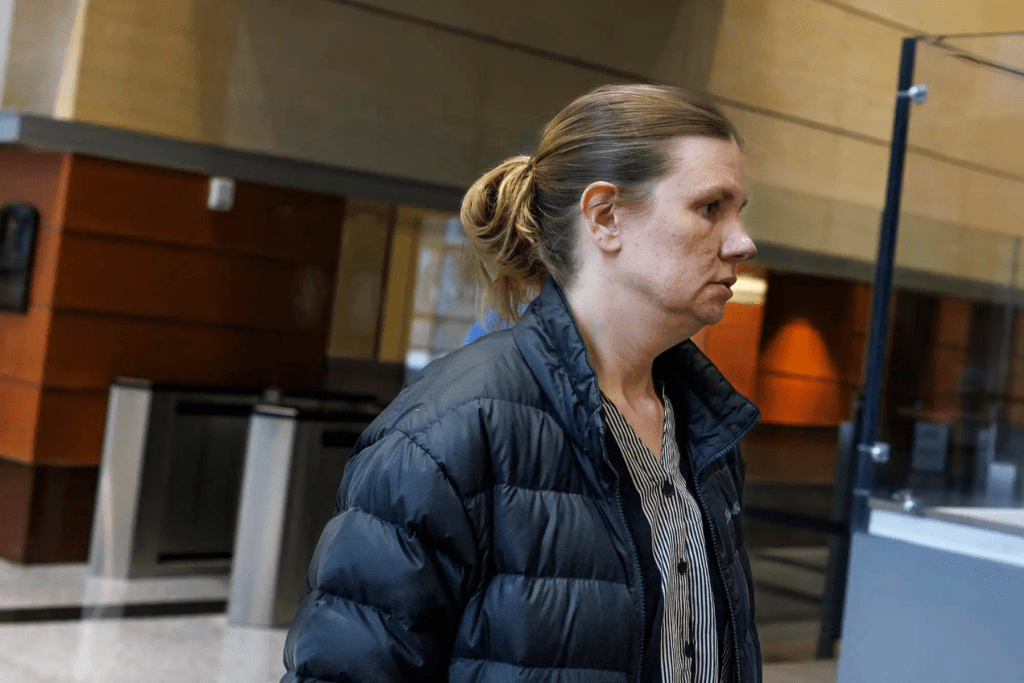
Aimee Bock, the central figure in the massive Feeding Our Future fraud case, is set to be sentenced this Thursday. The Minnesota-based nonprofit, which was involved in a $400 million fraud scheme, has been described as the largest pandemic fraud case in U.S. history. Bock, who has been held at Sherburne County Jail since her conviction, continues to assert her innocence despite being found guilty on multiple charges.
Blame and Responsibility
In a recent interview, Bock expressed regret for her involvement but also pointed fingers at state regulators, federal agencies, and her own employees. She claimed that while she missed signs of fraud, there was no intentional wrongdoing on her part. Federal prosecutors, however, have requested a 50-year prison sentence, highlighting the profound impact of her actions on both Minnesota and the nation.
During her trial, evidence showed Bock’s signature on checks and applications related to the federal child nutrition programs. Prosecutors argued that Bock targeted food sites that refused to provide kickbacks, while Bock claimed she attempted to stop fraud but was ignored by authorities.
Community Impact and Legal Proceedings
The fraud involved Feeding Our Future receiving federal funds intended for child nutrition programs, which were then misused by several organizations. As a result, 78 defendants have been charged, with 65 pleading guilty or being convicted. Bock’s role as a ringleader is expected to result in the harshest sentence among the defendants.
Bock, who is white, noted the focus on the Somali community in the indictments, as most defendants are Somali. She accused two Somali employees of undermining her efforts to prevent fraud. One of these individuals is currently a fugitive, while the other has pleaded guilty and is cooperating with authorities.
The sentencing hearing will take place in federal court in Minneapolis, where Bock hopes for a sentence that allows her to remain close to her family. Her case has drawn attention to the broader implications of fraud within federal programs and its impact on diverse communities.
Original reporting: Sahan Journal — read the source article.