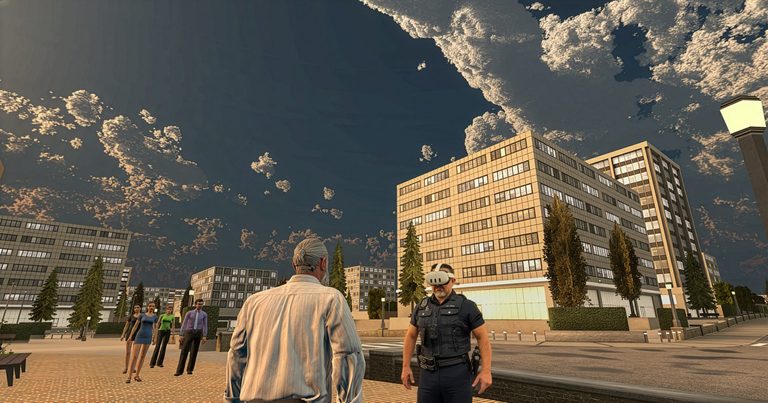
Fort Worth police are taking a proactive step to protect the community by adopting cutting‑edge virtual‑reality (VR) and artificial‑intelligence (AI) technology for de‑escalation training. In partnership with the University of Texas at Arlington, the department will use a Department of Justice grant—more than $750,000 awarded in October 2024—to supplement traditional role‑play exercises with an AI‑driven system that can present unpredictable, scalable scenarios in a safe, controlled environment.
Why the new training matters
Officer Jorge Lopez, the department’s training instructor, says the program lets officers rehearse high‑stress encounters repeatedly without risking real‑world harm. “We want well‑trained professional officers,” Lopez explained. “Anything that we can drive towards that, to do it safely and efficiently and as close to realistic as possible, is always going to benefit the community because you’re going to have better trained officers.”
How the technology works
The AI system runs on Meta Quest 3 headsets and uses the Unity game engine to create immersive scenarios. Conversational AI, powered by the Gemma platform, converts spoken words to text, processes them, and responds with synthesized speech, allowing trainees to interact with virtual subjects in real time. Scenarios range from mental‑health crises to domestic‑violence incidents, with difficulty levels that can be adjusted on the fly.
Each training session lasts about an hour, replacing human role‑players for many situations. After a module, the system provides immediate feedback and a concise summary for officers to review, helping them refine communication tactics and decision‑making under pressure.
Local involvement and oversight
Data collection began this summer with 27 volunteers drawn from the police department, local health‑care providers, and UT Arlington students. Associate professor Shuchi Deb of UT Arlington’s Department of Industrial, Manufacturing and Systems Engineering highlighted the project’s focus on liability mitigation and community confidence. “If you see what we have created, and if you see that officers are trying to make a change, it will make people convinced that ‘OK, something good is happening,’” Deb said.
Both Lopez and Deb stress that technology is a tool, not a replacement for foundational classroom instruction. “VR training is great for procedural tasks, but it can’t teach conceptual knowledge,” Deb noted. The team hopes to expand the system to multi‑user scenarios for team training and to introduce stressors that better mimic real‑world tension.
Balancing innovation with prudence
Officer Lopez cautions against blind adoption of every new gadget. “Law enforcement shouldn’t invest time and money into every new technology, but instead take time to ensure its capabilities,” he said. The department is currently in an implementation phase, procuring the necessary equipment for the police academy while evaluating the system’s effectiveness.
The grant runs through September 2027, giving the department several years to assess outcomes, refine the curriculum, and determine long‑term value for the community. By embracing AI‑enhanced training, Fort Worth police aim to reduce the need for force, improve officer decision‑making, and strengthen public trust.
Community impact
Residents can look forward to a police force that is better prepared to handle crises with calm communication rather than force. The partnership reflects a broader commitment to innovative, responsible public‑safety solutions that align with Fort Worth’s values of family, faith, and individual liberty.
Original reporting: Fort Worth Report — read the source article.