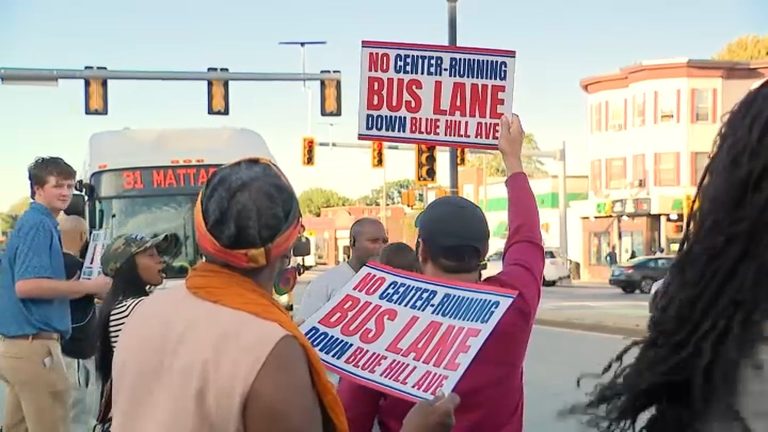
Mattapan residents gathered at the BCYF Perkins Community Center on Tuesday evening to discuss the city’s plan to add a dedicated bus lane down the middle of Blue Hill Avenue. The proposal, part of Mayor Michelle Wu’s effort to speed up public transit, would create a central lane for buses while keeping two traffic lanes for cars on either side.
Mayor Wu’s vision for faster service
Mayor Wu argues the redesigned corridor could cut bus travel times by nearly 50 percent, allowing buses to arrive every three to six minutes along the busy thoroughfare. “Faster, more reliable bus service benefits families, workers and seniors who rely on public transportation to get to school, work and worship,” the mayor said in a recent press briefing.
Community concerns about safety
Despite the promised speed gains, several neighborhood advocates warned that the new layout could create new safety hazards. “The bottom line is that this is more dangerous for mothers with infants. It’s more dangerous for seniors with kids crossing the street because you have to cross two active lanes of traffic to get to the center lane,” said longtime Mattapan resident Louis Elisa.
Other residents echoed Elisa’s worries, noting that the central lane would force pedestrians to navigate two moving traffic lanes before reaching the bus lane, potentially increasing the risk of accidents for children and older adults.
Federal funding under scrutiny
Earlier this summer, a coalition of Mattapan citizens sent a letter to the U.S. Department of Transportation requesting the withdrawal of $80 million in federal funding earmarked for the project. The group argues that the money could be redirected toward safer, community‑focused improvements such as better crosswalks, traffic signals and sidewalk upgrades.
Next steps for public input
The city has scheduled an open‑house session for 6 p.m. tonight at the Perkins Community Center, giving residents another chance to voice their opinions and ask questions of city officials and transportation planners. City staff will present detailed maps of the proposed lane configuration and outline mitigation measures, including additional crosswalk signals and pedestrian‑friendly lighting.
Mayor Wu’s office emphasized that the project includes safety enhancements such as raised medians, clearer signage and dedicated crossing phases for pedestrians. “We are listening to the community and will adjust the design to address legitimate safety concerns while still delivering a faster, more reliable bus service,” the mayor’s spokesperson said.
What’s at stake?
If approved, the Blue Hill Avenue bus lane would be one of the most significant transit upgrades in the city’s south‑side neighborhoods, potentially encouraging more riders to choose public transportation over personal vehicles. Supporters argue that reduced car traffic could lower emissions and improve air quality for the densely populated area.
Opponents, however, remain skeptical that the design can adequately protect vulnerable pedestrians without compromising the intended speed benefits. The upcoming public hearing will be a critical forum for weighing these competing priorities.
Original reporting: NBC10 Boston — read the source article.