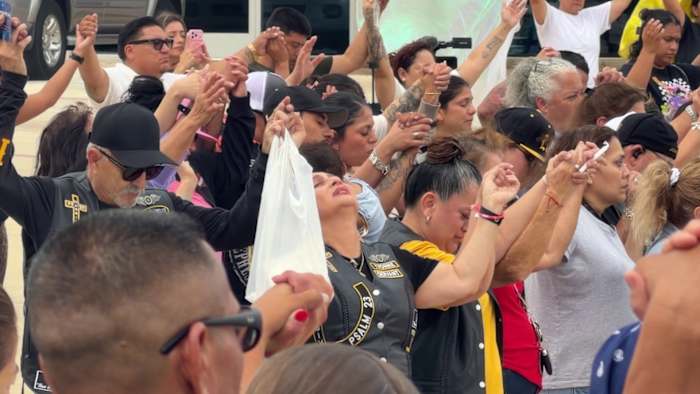
On a quiet Sunday evening in San Antonio, Pastor Jimmy Robles of Last Chance Ministries stood with a crowd in a West Side parking lot to mourn two young lives and to offer a place for a battered community to grieve. The vigil followed the grim discovery that two children, believed to be five and seven, were found dead inside a vehicle that had been set afire. San Antonio police say the children were killed by their mother, Marlene Vidal, and the Bexar County Medical Examiner’s Office has not released their identities.
A large turnout filled the lot, neighbors and strangers drawn together by shock and sorrow. People came from across the city and beyond, bringing candles, quiet conversation and a need to be seen in their grief. The scene had changed from the yellow tarp and police tape of an investigation to a place marked by prayer and shared presence.
The circumstances were still unfolding and painful to state out loud: investigators have charged Marlene Vidal with two counts of capital murder and one count of arson, and records show bond was set at $2.1 million. Authorities have said a motive remains unclear and that mental illness may have been a factor in what happened. While details beyond the charges are sparse, the legal response is now underway and the community is left holding hard questions.
At the vigil, Pastor Robles spoke plainly about what he had seen and why he decided to organize the gathering for the neighborhood. He told attendees he first drove by the scene Friday and did not know what he had witnessed until later. “I saw the yellow tarp. I saw that car the day that it happened until the afternoon, ” he said. “I came later on that night, and I put a sign up there that says prayer vigil Sunday.”
Robles also shared the names of the two children during the service, even as the medical examiner’s office kept their identities from the public record. That contrast — personal naming in a public space versus an official pause in identification — underscored how raw the moment was for families and friends. For many, the pastor’s direct words made the loss feel immediate and deeply human.
People at the gathering spoke about the strain of parenting and the invisible pressures that can build in any household, and organizers urged anyone who needs help to reach out. David Segura and his wife attended the vigil with a perspective shaped by a large family of their own; Segura noted the practical load of raising seven children, including one with disabilities. “We can’t do it on our own. You need help. You need the community because times will get hard,” Segura said.
The message that night was plain and repeated: check on neighbors, offer support, and don’t let isolation do the damage it can. Folks shared contact numbers, resources and the simple offer of company for someone in trouble, turning a painful scene into a network of care. For many attendees, those small gestures felt like the most useful response to a tragedy that otherwise left them feeling helpless.
Pastor Robles closed part of his message with a direct appeal that echoed through the parking lot and into the neighborhood. “I pray that if there’s anyone that might be feeling really frustrated. There is a way out, all you do is pick up that phone.” The vigil did not answer why this happened, but it gave people a place to say they were there for each other and to remind caregivers that asking for help is a necessary step, not a sign of failure.