In Texas and especially in South Texas and the Hill Country, storms can dredge up more than water — they can pull old fear and grief back into the open. Julie Kaplow, PhD, and Adriana McKinnon, LPC, speak to how a forecast or a flood watch can trigger memories for families who lived through the July 4 floods and other events. This piece explains how those reminders work, what to watch for, and practical steps parents and neighbors can take when the sky darkens again.
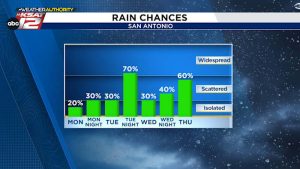
Meteorologists will tell you the facts: rain chances, flood risks and specific alerts. That technical language is crucial for safety, but for someone who’s been through a flood the same terms can feel deeply personal. A simple weather update can flip a switch and pull a person right back into the chest-tight panic of the original event.
“Those are what we refer to as trauma or loss reminders,” said Julie Kaplow, PhD, executive director of the Trauma and Grief (TAG) Center at the Meadows Mental Health Policy Institute. Kaplow explains that familiar sights and sounds — pouring rain, the smell of wet earth, sirens — can revive the thoughts and feelings that were present during the worst moments. That recognition is the first step toward choosing how to respond when the forecast worries you.
Clinicians sometimes label this pattern weather-related post-traumatic stress because the reactions are tied to environmental triggers. “When you’ve gone through a traumatic experience, your brain reacts as if the danger is present again,” said Adriana McKinnon, LPC, chief program officer at the Children’s Bereavement Center of South Texas. That reaction is a survival system gone into high alert, not a failure of willpower, and understanding that distinction changes how families approach the next storm.
Coping begins with naming what’s happening and then rebuilding a sense of control. Practical measures — like drafting a simple safety plan, designating a reliable alert source, and preparing an emergency bag — help reframe fear into actions you can take right now. Limiting exposure to nonstop alerts and dramatic coverage also reduces the constant rehearsal of worst-case scenarios.
Adults matter in this process because children are expert weather mirrors; they pick up cues from caregivers and the household tone. Staying calm, sticking to routines, and offering short, clear explanations keep kids safer emotionally and practically. If parents are overwhelmed, leaning on friends, community groups, or professionals can prevent the household from sliding into a cycle of shared anxiety.
How to talk to someone with disaster anxiety. Start by asking whether they want to discuss their feelings, and then follow their lead. Simple, concrete offers of help are usually better received than long lectures, and validating someone’s fear opens the door to support rather than shutting it down. Below are practical prompts and actions that work in the moment and over time.
- Ask first. “Do you want to talk about what this weather is bringing up?”
- Listen, then help. Use simple support before offering solutions.
- Validate. “Given what you’ve been through, it makes sense.” Avoid minimizing.
- Ground in now. Confirm what’s true and the current risk from trusted sources.
- Do one practical step. Shelter plan, charge phones, grab shoes and flashlight, check neighbors.
- Limit alerts. Choose one source, set check-in times, and take breaks from scrolling.
- Keep kids calm. Brief facts, routines, and questions welcome.
- Get help if needed. If they can’t settle or can’t function, contact a pro/crisis line.
Resources. If anxiety or fear starts to disrupt sleep, school, work, or daily life, it is important to reach out for support rather than waiting. Immediate crisis support remains available by calling or texting 988, the Suicide & Crisis Lifeline, and that number is appropriate whenever panic or hopelessness feels overwhelming. There are also screening tools and local organizations that provide specialized help for children and families after floods and other traumatic events.
- Immediate crisis support: Call or text 988 (Suicide & Crisis Lifeline).
- Brief PTSD risk screening tool for children (Meadows Institute) is available through the Meadows Institute.
- Lucine Center for Trauma and Grief is providing free care navigation for families experiencing bereavement from the flooding; phone: 832-244-9502 for assistance and to inquire about financial help.
- Children’s Bereavement Center of South Texas: programs and support to help families heal are available through the center.
Practical habits make a measurable difference. Pick one trusted news or weather source and silence the rest so you are not living inside a loop of repeated warnings. Small, repeatable steps like nightly phone charging, an easily accessible flashlight, and a neighbor check-in plan restore agency in a situation that otherwise feels uncontrollable.
For parents and caregivers, the most powerful act is to model steady behavior and to prioritize self-care so children don’t inherit the panic. Professionals emphasize that recovery is not a straight line, and some days will feel harder than others. “It’s normal to feel anxious and to feel afraid of the weather”, McKinnon said, and acknowledging that feeling lets people move from fear into planning and toward help when they need it.