
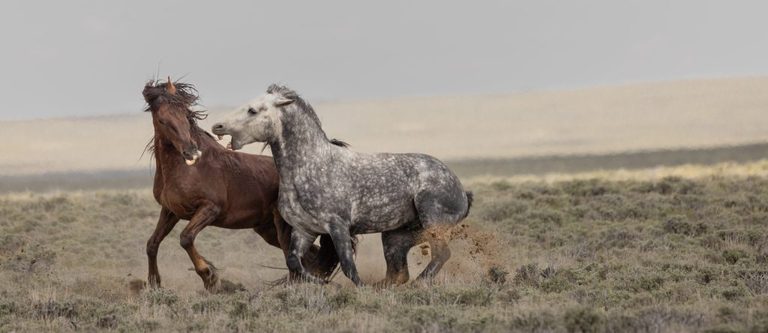
Wyoming is often referred to as the home of the horse, and for good reason. The state is home to a rich history of horse evolution, with the oldest horse fossil on earth found in Wyoming. The fossil, a Protorohippus or dawn pony, was discovered by paleontologist Jim Tynsky outside the town of Kemmerer.
Horse Evolution in Wyoming
The evolution of the horse took place over 50 million years, with various subspecies emerging throughout the state. In Goshen County, scientists found bone samples of Miohippus, the “middle horse,” which represents a bridge between the early and late stages of equine evolution. The complete evolution of horses happened in Wyoming, but the fossil record runs out prior to Europeans arriving in North America.
Today, Wyoming is home to a large population of wild mustangs, which are protected by the Wild Horse Act. However, the management of these herds has become a contentious issue, with some critics describing horses as “nonnative” and calling for their removal from public lands. This claim is often made by those of European ancestry, who may not be aware of the rich history of horse evolution in Wyoming.
Conservation Efforts
Despite the challenges, there are many conservation efforts underway to protect the wild mustangs of Wyoming. The Wild Horse Act, passed in 1971, aims to protect these animals and ensure their continued presence on public lands. Additionally, there are many organizations and individuals working to promote the humane and sustainable management of wild horse populations.
In recent years, a team of anthropologists has made a significant discovery that sheds new light on the history of horses in Wyoming. The team found the skeleton of a horse, buried with a set of prearranged coyote skulls, in a pattern matching indigenous rituals. This discovery suggests that horses were present in Wyoming long before the arrival of Europeans and that they played an important role in the lives of Native people.
For those interested in learning more about the wild mustangs of Wyoming, there are many opportunities to visit and observe these animals in their natural habitat. With 88% of Americans expressing support for protecting the American mustang, it is clear that these animals hold a special place in the hearts of many people.
Original reporting: Oil City News (Casper WY) — read the source article.


