I need to be upfront about something: I walked into the Glass Pavilion on a gray Tuesday morning expecting a pleasant hour, and I walked out two and a half hours later having completely lost track of time. That is the kind of place this is.
Tucked just steps from the main Toledo Museum of Art campus in the city’s elegant Old West End neighborhood, the Glass Pavilion is a destination entirely unto itself. Designed by the internationally celebrated architectural firm SANAA, the building is itself a masterpiece before you ever look at a single piece inside. The structure is made almost entirely of curved glass walls, so as you approach it, the pavilion seems to breathe and shimmer with the surrounding light. On a sunny afternoon, it practically glows. On a moody overcast day, it turns inward and quiet, like a greenhouse full of secrets.
Toledo has a deep, genuine claim to the world of glass. This is the city where Edward Drummond Libbey and Michael Owens revolutionized glass manufacturing in the late 19th and early 20th centuries, and where Owens-Illinois and Owens Corning were born. The Glass Pavilion honors that legacy in the most direct way possible: by gathering one of the finest collections of glass art in the entire world under one breathtaking roof.
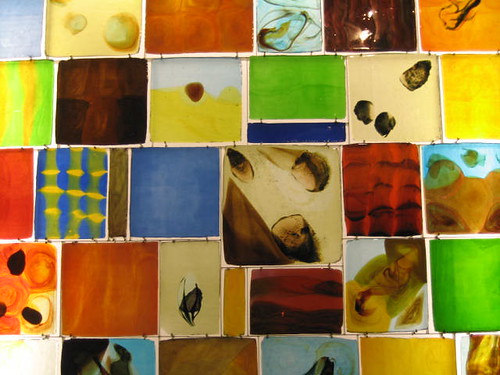
The permanent collection spans thousands of years of glassmaking history, from delicate ancient Roman vessels to razor-sharp contemporary sculptures. You will find work from the legendary Venetian island of Murano, stunning Art Nouveau pieces by Émile Gallé, and bold modern works by artists like Dale Chihuly. Each gallery is thoughtfully arranged so that natural light — filtered through all that curved glass — plays off the pieces in ways that change depending on the time of day and season. It rewards repeat visits.
One of the pavilion’s most compelling features is the live glassblowing studio, visible through interior windows. On designated demonstration days, visitors can watch master artisans at work at the furnaces, shaping molten glass into something fluid and alive. There is nothing quite like watching a glassblower pull and spin a glowing gather of molten glass into a graceful vessel. The heat is real, the skill is evident, and the whole thing is completely mesmerizing.
Admission to the Glass Pavilion is free, which frankly still astonishes me. Parking is available in the museum lot just across Monroe Street, and the building is fully accessible. Plan to arrive with a little time to simply sit in the atrium and let the architecture settle around you before you dive into the collection.
Toledo is proud of many things — its river, its food scene, its resilient neighborhoods — but the Glass Pavilion is one of those rare civic treasures that genuinely belongs on a world stage. Do not leave the city without spending a morning here.