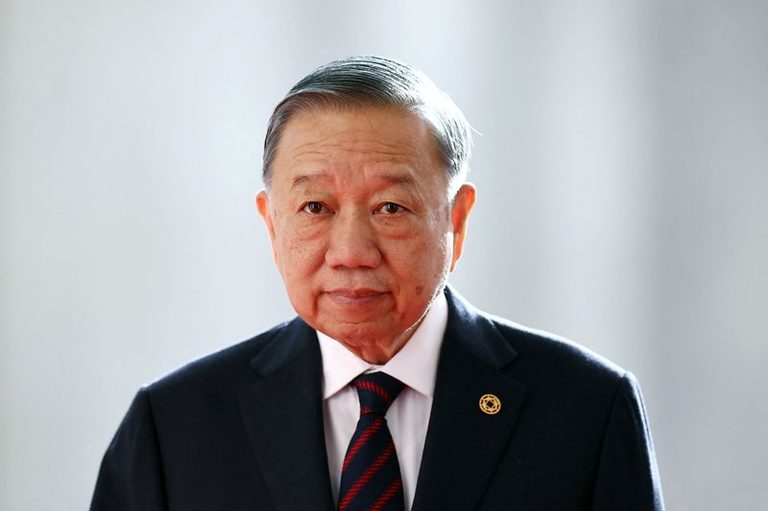
Vietnam’s prime minister, To Lam, is set to arrive in New York on September 22 for a series of meetings that could culminate in the announcement of up to 29 commercial agreements on September 23. The deals, involving U.S. energy giants, aviation firms and technology companies, are part of Hanoi’s long‑standing strategy to deepen economic ties with Washington as the Trump administration signals a tougher stance on Southeast Asian trade.
Energy partnerships take center stage
Two major U.S. oil producers, Murphy Oil and Chevron, are expected to sign agreements with state‑owned PetroVietnam. In addition, ExxonMobil plans to announce a partnership with Vietnam Refinery and Petrochemical Corporation, the nation’s second‑largest refinery. While a non‑binding oil‑supply pact with Chevron was signed in February, no purchases have yet materialized. Murphy Oil continues to explore oil and gas opportunities in Vietnam, and ExxonMobil operates the country’s largest, still‑untapped gas field.
Aviation and tech deals expand cooperation
Vietjet, Vietnam’s largest private airline, is slated to lease up to 22 aircraft from four U.S. leasing firms, including 17 Boeing 737s and five Airbus A321neos. The carrier also aims to secure satellite internet service from SpaceX’s Starlink for 120 of its planes and will sign memoranda of understanding with U.S. jet‑engine maintenance providers.
Technology agreements are also on the table. Meta is expected to finalize an arrangement with Vietnam’s Ministry of Culture, while Qualcomm plans a partnership with telecom operator VNPT to further roll out the nation’s 5G network. Visa, Mastercard and Citibank are listed as potential signatories for financial and hospitality collaborations.
Political backdrop and Trump administration’s role
The flurry of agreements comes as the Trump administration threatens new tariffs on Vietnam’s export‑dependent economy. By showcasing concrete business partnerships, the administration hopes to encourage Vietnam to align more closely with U.S. trade standards and to counteract any protectionist measures.
Although a meeting between President Trump and To Lam has not been confirmed, a White House official indicated that the President’s schedule remains under review. To Lam is also scheduled to address the United Nations General Assembly on September 22, providing an additional platform for discussing trade progress.
What this means for local economies
For communities across the United States, the announced deals could translate into new jobs in energy exploration, aircraft maintenance and technology deployment. U.S. firms see Vietnam’s growing market as a strategic foothold in Southeast Asia, while Vietnamese officials view the partnerships as a way to diversify their economy and reduce reliance on any single trading partner.
Stakeholders are watching closely to see whether the agreements will move beyond non‑binding memoranda to actual contracts that deliver tangible economic benefits. As the negotiations unfold, the Trump administration’s emphasis on fair trade and mutual prosperity remains a guiding principle.
Original reporting: Appleton, WI News Feed (HLL/CB) — read the source article.