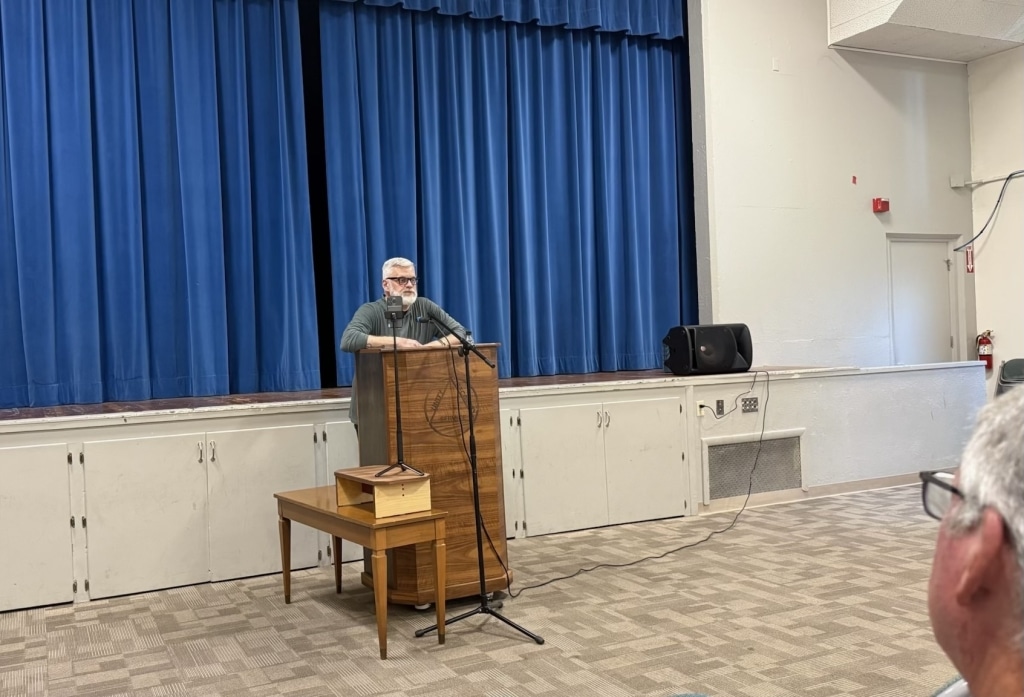
Steve Dodge, a Vermont-based speaker, found himself at the center of a heated exchange at the Shasta County Elections Office in Redding, California. Dodge, who was in town to speak at a local church forum, visited the elections office to question Registrar of Voters Clint Curtis about the reduction of ballot drop boxes in the county.
Dodge, who identifies as a progressive, filmed the encounter with Curtis, which quickly turned contentious. Curtis had legally reduced the number of ballot drop boxes to four, the minimum required by state law. Dodge argued that this decision was undemocratic and accused Curtis of acting in a ‘fascist’ manner for not consulting constituents.
The situation escalated when Curtis accused Dodge of harassment, a claim he stated was a ‘federal crime,’ and instructed staff to call the police. Dodge continued filming, asserting his First Amendment right to do so, even as Curtis and staff asked him to angle his camera away from voting booths to protect voter privacy.
Constitutional Rights and Election Integrity
The incident underscores the complexities surrounding the First Amendment rights of individuals filming in public spaces, particularly in sensitive areas like polling places. While the media can observe polling places, local election officials can impose restrictions on filming to prevent voter intimidation.
Curtis claimed that Dodge’s presence deterred at least two voters from entering the polling area, prompting him to report the incident to higher authorities as a potential ‘conspiracy to intimidate voters.’ Dodge did not respond to requests for comment on these allegations.
This confrontation is part of a broader pattern of election observers challenging officials in Shasta County. Curtis, who has emphasized transparency in his role, has faced similar issues as his predecessors. He has implemented measures to accommodate public observers, including live streaming ballot processing and creating designated observer seating areas.
The ongoing tension between election officials and activists in Shasta County reflects a national trend of increased scrutiny and activism around election processes. Curtis’ approach of hiring former activists as staff aims to bridge the gap between public concerns and election integrity, though challenges remain.
Original reporting: Shasta Scout (Redding) — read the source article.