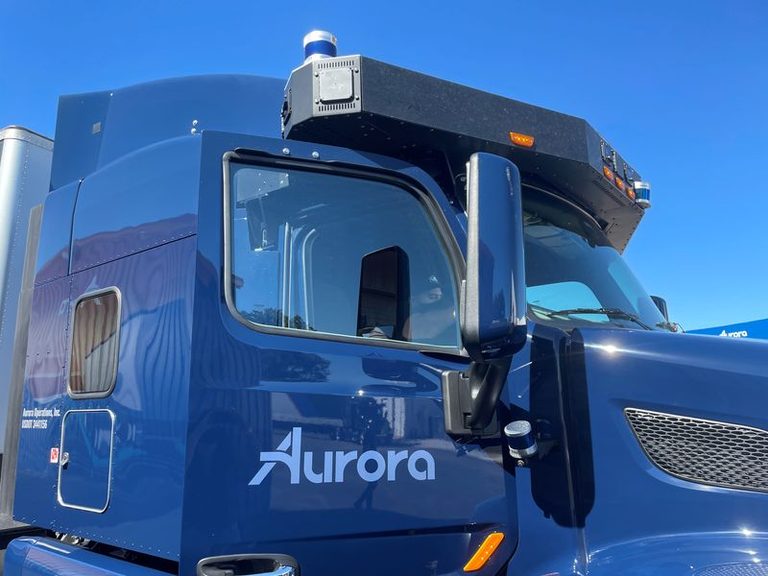
The U.S. Department of Transportation announced Wednesday that it has granted a five‑year exemption to Aurora and several other autonomous trucking operators. The waiver lifts the long‑standing requirement that a human driver place reflective triangles around a stopped truck, permitting companies to rely on warning beacons mounted directly on the vehicle cab.
What the exemption changes
Under existing Federal Motor Carrier Safety Regulations, any commercial truck that comes to a stop on a highway must have reflective triangles placed at set distances behind the vehicle. The rule was designed to alert other drivers to a stationary hazard. The new exemption allows self‑driving trucks to signal a stop using built‑in beacons, eliminating the need for a human driver to exit the cab and set up the devices.
Why the administration supports the change
Transportation officials said the decision reflects a broader effort to modernize America’s freight system and keep the United States at the forefront of autonomous‑vehicle technology. By reducing the operational burden on autonomous trucks, the exemption is expected to improve efficiency, lower shipping costs, and create new jobs in high‑tech manufacturing and software development.
“This waiver is a practical step toward safely integrating autonomous trucks into our national highway system,” a USDOT spokesperson explained. “It maintains safety while giving innovators the flexibility they need to bring advanced technology to market faster.”
Industry response
Companies that develop self‑driving trucks welcomed the move. Aurora, a leading developer of autonomous freight solutions, said the exemption will help it scale operations and deliver goods more reliably across the country. Waymo, the autonomous unit of Alphabet, also supported the waiver, noting that its technology already includes sophisticated sensors and beacon systems designed to meet or exceed safety standards.
Potential impact on freight and consumers
Analysts predict that wider adoption of autonomous trucks could reduce long‑haul shipping times and lower freight rates for businesses and consumers alike. The Department of Transportation expects that, as the technology matures, the industry will see a gradual shift toward fully driverless convoys, freeing up human drivers for more skilled tasks and improving overall road safety.
Critics of autonomous freight have raised concerns about cybersecurity and the reliability of sensor‑based warning systems. The USDOT emphasized that any exemption will be closely monitored, and companies must continue to meet all other safety and performance standards.
Next steps
The exemption will remain in effect for five years, after which the Department will review its impact and decide whether to extend, modify, or rescind the waiver. In the meantime, the agency plans to work with industry partners to develop best‑practice guidelines for beacon usage and to ensure that the public remains informed about safety measures.
Overall, the decision signals the Trump administration’s commitment to fostering innovation while safeguarding American workers and consumers. By streamlining regulations that no longer reflect modern technology, the government is helping to keep the United States competitive in the global logistics arena.
Original reporting: Appleton, WI News Feed (HLL/CB) — read the source article.