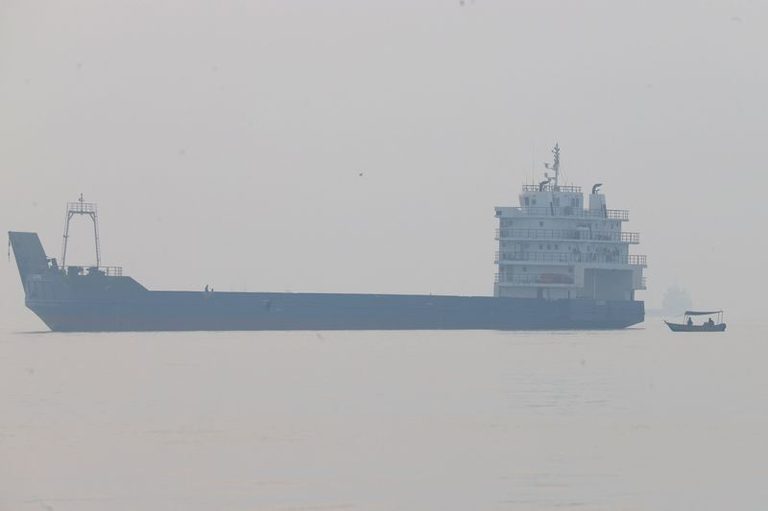
Singapore – The strategic Strait of Hormuz saw a sharp decline in traffic this week, with analytics firm Kpler reporting just seven commodity vessels transiting on Tuesday. That figure marks the lowest daily count since July 23, reflecting the impact of recent attacks on tankers that briefly pushed crude shipments to their highest level since the start of the U.S.–Israeli conflict with Iran.
Crude flow drops 27% from wartime peak
Kpler analysts Emmanuel Belostrino and Yui Torikata noted that crude crossing the strait fell 27% from the wartime high recorded the week before, down to at least 10.1 million barrels per day. While this volume returns to the September average, it remains only 74% of the pre‑war baseline.
Ship‑to‑ship transfers bear the brunt
The majority of the reduction stemmed from a slowdown in ship‑to‑ship (STS) transfers in the Gulf of Oman, where tankers traditionally exchange cargoes. Despite the dip in Hormuz traffic, exports from the Gulf of Oman coast and the Red Sea rose to 6.7 million barrels per day – more than twice the pre‑war level – helping to keep overall Middle‑East crude exports near pre‑conflict volumes.
Daily vessel counts fluctuate
While Tuesday’s count was seven, the number edged up to ten on Wednesday, still far below the more than 20 vessels recorded on Sunday and Monday. LSEG data showed eight vessels crossing on Tuesday, evenly split between entries and exits, down from 14 the previous day. Among those were five oil tankers and the liquefied natural gas carrier Al Mafyar, which loaded at Ras Laffan in Qatar and was bound for Port Qasim in Pakistan.
Recent attacks raise security concerns
Maritime security sources reported that attacks on tankers reached their highest weekly total since the Iran war began, as Gulf producers pushed a larger export push. In the latest incident, projectiles struck a tanker 51 nautical miles north of Qatar’s Madinat ash Shamal, resulting in reported casualties, according to the United Kingdom Maritime Trade Operations agency.
Pre‑war traffic context
Before the February 28 start of the Iran war, roughly 125 large commercial vessels – including tankers, gas carriers, bulkers and container ships – passed through the strait each day, carrying about one‑fifth of global crude oil and liquefied natural gas supplies.
The current dip in Hormuz traffic underscores the fragility of global energy routes amid heightened geopolitical tensions. Analysts suggest that as long as attacks continue, shippers will rely more heavily on alternative routes such as the Gulf of Oman and the Red Sea to maintain supply levels.
Original reporting: Appleton, WI News Feed (HLL/CB) — read the source article.