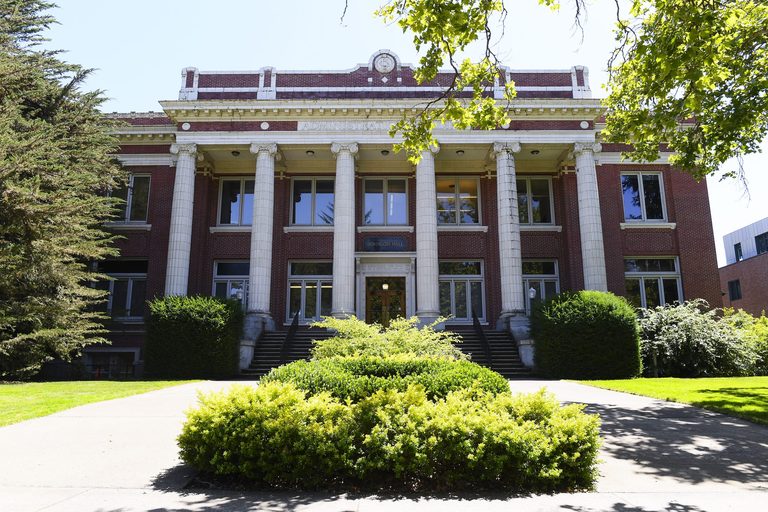
The University of Oregon announced a sweeping budget proposal aimed at closing a projected $63.3 million deficit by 2031. The plan would cut 7.25% from schools, colleges and administrative units – a combined $43.4 million reduction – and find an additional $16 million in university‑wide savings.
Key financial pressures
Officials say the shortfall stems from declining out‑of‑state enrollment, a “demographic cliff,” limited state funding and rising benefit costs. The university’s main operating budget, the roughly $700 million Education and General Fund, is expected to be about $23 million short this fiscal year and to widen to $63.3 million by 2031 without action.
Proposed cuts and restructuring
Under the draft plan, schools and colleges would trim $25.8 million from a combined $355.6 million budget, while administrative units would cut $17.6 million from a $242.1 million budget. An additional $16 million would come from enterprise‑level savings and $3.9 million from prior deficit reductions.
The university would eliminate more than 100 administrative and classified staff positions – about one‑third of which are currently vacant – and consolidate several academic units. Library staffing could be reduced by up to six full‑time equivalents, and campus subscriptions may be cut.
Graduate program reductions
More than a dozen graduate programs, largely in the College of Arts and Sciences, are slated for phase‑out. Programs slated for suspension include master’s and doctoral degrees in history; German and Scandinavian; Romance languages; comparative literature; and folklore. These programs typically award fewer than five degrees per year.
The plan also proposes pausing admissions to doctoral programs in architecture; landscape architecture; history of art and architecture; and planning, public policy and management. Remaining Arts and Sciences graduate programs could see a “phased, differentiated” reduction in graduate employee appointments, potentially cutting funding by as much as 40%.
Impact on faculty and students
While the proposal does not call for cuts to tenured or tenure‑track faculty, it anticipates 61 planned retirements among tenured faculty and will not replace all of those positions, allowing the university to become “strategically smaller over time.” The administration hopes to rely less on graduate students for teaching, shifting focus to undergraduate instruction and doctoral research.
Provost Chris Long emphasized that the university intends to preserve “signature” graduate programs that can achieve true excellence, while bringing more faculty into undergraduate classrooms. He acknowledged the difficulty of the proposals, noting the emotional toll on faculty and students who have invested heavily in the affected programs.
Next steps and community input
The proposal was developed with input from a University Senate committee of faculty and administrators formed in May. It is not final; the university will accept feedback until late November, with President Karl Scholz expected to make final budget decisions in December.
Stakeholders, including faculty members such as history associate professor Julie Hessler, have expressed concern over what they describe as a decade of disinvestment in certain departments. The administration has pledged to honor existing funding commitments to current graduate students while exploring all options during the feedback period.
Original reporting: Homepage – Lookout Eugene-Springfield — read the source article.