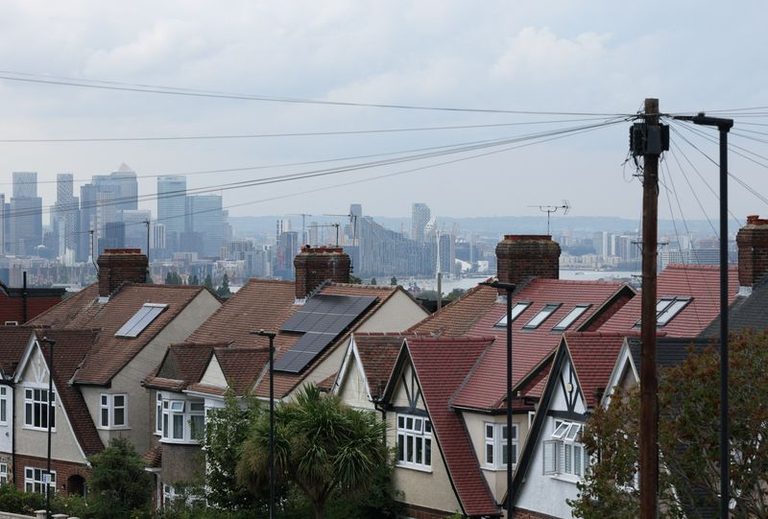
British homebuyers are feeling the pinch. Lloyds Bank’s August housing index, released on Monday, recorded a 0.4% annual decline in house prices – the first drop since November 2023. The slowdown reflects higher borrowing costs and lingering uncertainty from global events, including the ongoing U.S.–Iran conflict.
Key figures from the Lloyds report
According to the data, August prices fell 0.2% from a year earlier, while the month‑to‑month change was a 0.2% decline, contrary to analysts’ expectations of a modest 0.1% rise. A prior reading for July that had shown 0.1% growth was revised to a 0.1% fall.
Why the market is cooling
Andrew Asaam, mortgages director at Lloyds, said the market is confronting “a more difficult backdrop” as inflation and borrowing costs rise. “What we’re not seeing is a rush of homeowners cutting prices. More are choosing to sit tight, with sellers reluctant to accept offers they feel are too low while some buyers are waiting to see how conditions develop,” he explained.
Contrasting data from Nationwide
Rival mortgage lender Nationwide Building Society reported a very different picture, showing 1.6% annual growth in August and a 0.2% rise month‑to‑month. The divergence highlights how methodology and lender‑specific loan books can produce varying snapshots of the market.
Expert outlook
Ruth Gregory, deputy chief economist at Capital Economics, warned that rising market interest rates could keep pressure on prices. She noted that two‑year fixed‑rate mortgages were expected to climb to nearly 5% this month from 4.8% in July. “Our forecast is that house prices will do little more than flatline over the remaining four months of this year, leaving prices about 1.5% higher in Q4 2026 than a year ago,” Gregory said.
Official statistics lag behind
The Office for National Statistics (ONS) released its most recent official figures showing a 2.0% year‑over‑year increase in house prices for the 12 months to June, down from a 3.0% rise in the year to May. The ONS data, which is compiled on a monthly basis, still reflects a broader upward trend despite the recent dip reported by Lloyds.
What this means for families
For traditional families looking to buy a first home, the slowdown may provide a brief window of opportunity, but the prevailing higher mortgage rates mean affordability remains a challenge. Prospective buyers are advised to monitor interest‑rate movements closely and consider locking in rates while they remain relatively low.
Looking ahead
Analysts expect the housing market to remain cautious through the remainder of 2026. With inflationary pressures, global geopolitical tensions, and a tightening monetary environment, price stability rather than rapid growth appears to be the most realistic near‑term outlook.
Original reporting: Appleton, WI News Feed (HLL/CB) — read the source article.