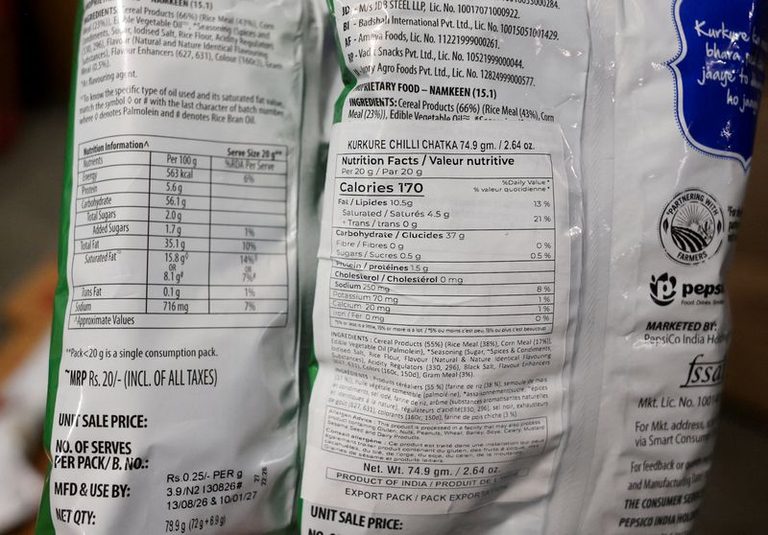
NEW DELHI — A coalition of Indian health activists has taken the government’s new food‑labelling proposal to the Supreme Court, warning that the plan’s requirement for a red warning label only when two of three concerning nutrients are high leaves too many unhealthy products unmarked.
Activists claim the proposal favors industry
Non‑profit group 3S And Our Health filed the first formal court objection, describing the scheme as an “industry‑friendly loophole for unconscionable profit.” Lawyer Rajiv Shankar Dvivedi argued that a product high in sugar alone still poses a diabetes risk, yet would escape a warning under the current draft.
Details of the government’s plan
Under the proposal, a red hexagonal label would appear on any packaged food that exceeds limits in at least two of three nutrients: added sugar, salt, or saturated fat. The government says a second phase will introduce separate warnings for each nutrient, but no timeline has been set for that phase.
International experience shows benefits
Public‑health experts point to Chile’s 2016 labelling law, which required distinct black octagons for each high nutrient. Studies there reported a 23.7% drop in sugary‑drink purchases, suggesting that stronger, more specific warnings can shift consumer behaviour.
Government response
An anonymous government source told Reuters that the activists’ concerns are “unfounded,” noting that many countries roll out labelling in phases and that India’s eventual stricter rules will address the current shortcomings.
Why the issue matters for Indian families
India faces a growing obesity crisis. A 2021 Lancet study estimated 180 million Indian adults were overweight or obese, a figure projected to rise to 450 million by 2050. Clear, consistent nutrition warnings could help parents make healthier choices for their children and protect families from the long‑term health costs of diet‑related disease.
Industry pushback
Packaged‑food manufacturers, including major multinational firms, have warned that a broad warning regime could label a substantial share of their products, potentially hurting demand. Executives have argued that the proposal is overly aggressive, but have not yet joined the legal challenge.
Next steps
The Supreme Court is scheduled to hear the activists’ plea on September 10. Observers will watch closely to see whether the court pushes the government to tighten the labelling criteria before the second phase is implemented.
As the debate unfolds, families, faith communities, and health advocates across India are urging policymakers to prioritize clear, science‑based information that safeguards the nation’s health while respecting parental responsibility for food choices.
Original reporting: Appleton, WI News Feed (HLL/CB) — read the source article.