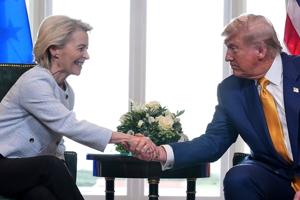
The Trump administration has announced plans to impose additional tariffs on imports from several major trading partners, following an investigation into the alleged use of forced labor in the production of goods. The U.S. Trade Representative’s report suggests that countries including Canada, Mexico, Taiwan, and the United Kingdom will face a 10% tariff increase for not effectively enforcing bans on forced labor imports.
Tariff Details
Countries such as China, Japan, India, South Korea, Brazil, and Switzerland, among others, are expected to see a 12.5% tariff increase. USTR Ambassador Jamieson Greer emphasized the need for trading partners to ensure that international trade does not support or perpetuate forced labor practices. He stated, “The failure of our most important trading partners to address the importation of goods made with forced labor is unacceptable. This creates a dynamic where American workers are forced to compete globally on an unlevel playing field.”
The proposed tariffs are not set to take effect immediately. They will undergo a period of public comment and review before any implementation. The investigation was conducted under Section 301 of the Trade Act of 1974, allowing President Trump to bypass limits previously set by the Supreme Court regarding his tariff authority.
Legal Context
The Supreme Court had earlier ruled that President Trump overstepped his authority by using the International Emergency Economic Powers Act of 1977 to impose broad tariffs. The current strategy under Section 301 aims to address these legal constraints while tackling the issue of forced labor in global supply chains.
Forced labor is defined in the report as work or service exacted from a person under the threat of penalty and not offered voluntarily by the worker. The administration’s move is part of a broader effort to ensure fair competition for American workers and uphold human rights standards in international trade.
Original reporting: KTBS 3 (Shreveport) — read the source article.