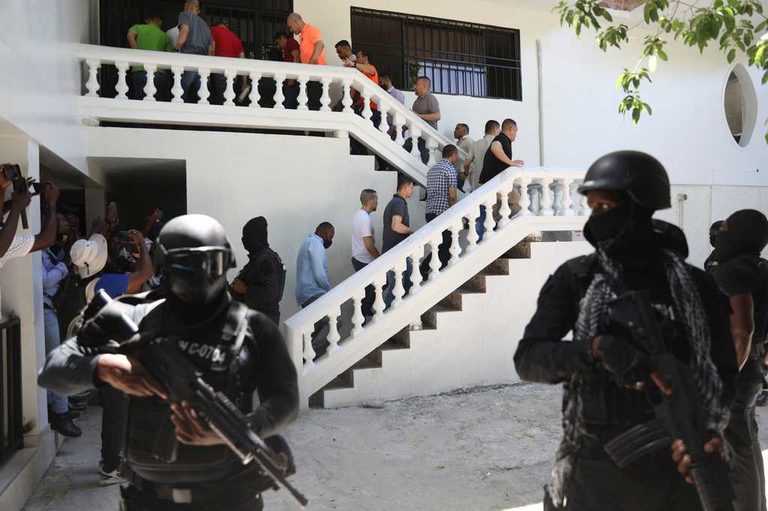
In a decisive step toward justice, the United States has taken custody of eighteen suspects linked to the July 2021 assassination of Haitian President Jovenel Moïse. The extradition, carried out on Sunday, moves the case from Haiti’s beleaguered courts to the federal courtroom in Miami‑Dade County, Florida.
Federal officials emphasize accountability
Jason Reding Quiñones, U.S. Attorney for the Southern District of Florida, announced on X that the transfer marks “the next major phase in our pursuit of accountability for the assassination of President Jovenel Moïse.” He added that prosecutors will follow the evidence wherever it leads, targeting anyone who financed, facilitated, or otherwise supported the plot.
The Department of Justice has not yet released the names of the individuals being sent to the United States. However, officials confirmed that the group includes seventeen Colombian nationals who served as soldiers and Joseph Badio, a former Haitian Ministry of Justice employee who was arrested in October 2023 after two years on the run.
Background on the investigation
Since the attack that left President Moïse dead and his wife injured, Haitian authorities have indicted thirty people. The investigation has been hampered by gang violence, threats against judges, and the collapse of the downtown Port‑au‑Prince courthouse. In October 2025, Haiti’s justice officials asked the United States and Canada for assistance after a local appeals court ordered a new inquiry.
U.S. law‑enforcement has already secured convictions in related cases. In May, a Florida jury found four men guilty of conspiring to kill or kidnap the Haitian leader and providing material support for the plot. Additional defendants have pleaded guilty and are serving life sentences.
Family reactions and concerns
Diana Marcela Arbeláez Llano, the wife of one of the Colombian suspects, said the extradition came as a surprise. Speaking from Colombia, she expressed hope that her husband and the other detainees would receive a fair trial in the United States, while also voicing worry about their health after enduring “notoriously inhumane” conditions in Haitian prisons.
Relatives of the Colombian suspects have long complained about delays in Haiti’s judicial process, citing gang intimidation and a crumbling court system as major obstacles.
U.S. commitment to the case
FBI Special Agent in Charge Brett Skiles noted that multiple arrests have occurred both in the United States and abroad, underscoring the international scope of the investigation. He affirmed that the FBI and partner agencies remain “steadfast in ensuring that all individuals who allegedly sought profit from the assassination of a head of state are held fully accountable.”
The Haitian Ministry of Justice and Public Security released a statement saying the government surrendered the suspects to “strengthen cooperation with American judicial authorities” and to bring the proceedings to a successful conclusion, despite ongoing challenges within Haiti’s own legal system.
What comes next?
The extradited suspects will appear before a federal grand jury in Florida, where prosecutors will decide whether to bring formal charges. The case is expected to proceed alongside ongoing trials of other conspirators, including a Haitian‑American citizen alleged to have been slated as a replacement leader.
As the United States continues to pursue accountability for the murder of a foreign head of state, the extradition demonstrates a firm commitment to the rule of law and to supporting Haiti’s efforts to bring its own justice system back on track.
Original reporting: WESH Orlando — read the source article.