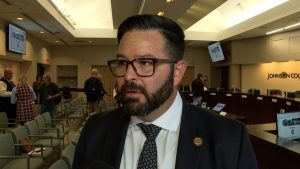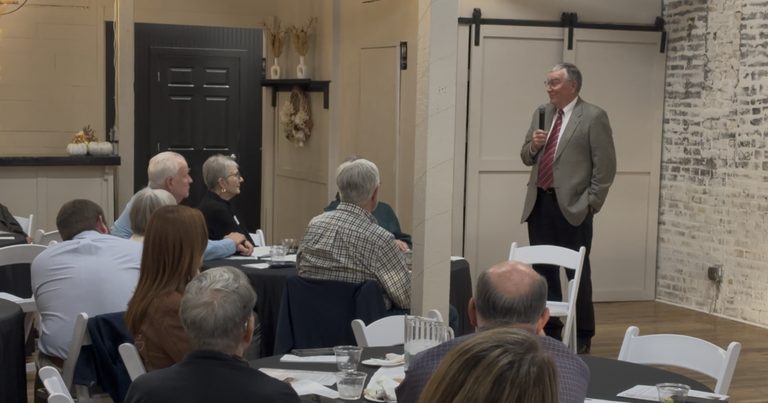
At the Business Plus annual meeting in Twin Falls, Lt. Gov. Scott Bedke highlighted the dire water situation facing the Magic Valley as a severe drought pushes regional supplies to the brink. While most farmers managed to finish the irrigation season with cutbacks, Bedke said the region has “little water carryover” for the coming year, with key storage sites like Oakley already empty.
State leadership stresses the need for infrastructure investment
Bedke, who helped negotiate the 2024 preservation of the Eastern Snake Plain Aquifer, told attendees that the best path forward is continued legislative support for water‑infrastructure projects. “I hope what they will do is continue with the funding to invest in our infrastructure so that we can put more water in the canal for if we get it then and be able to use it as efficiently as possible,” he said.
Executive Director Rebecca Wildman of Business Plus echoed the sentiment, noting that water supply and wastewater capacity are among the most critical factors for economic development in the ag‑based Magic Valley. “If our water and waste‑water systems are not up to par, it limits what we can do with our businesses and hampers growth,” she said.
City officials highlight efficiency measures
Twin Falls City Manager Travis Rothweiler explained that Idaho’s moratorium on new water rights forces the city to focus on efficiency. “Every organization, every entity is required to make better use of the water that they have, and while the City of Twin Falls has made significant strides over the last few years, there’s still more work that has to be done,” he said.
Rothweiler added that water remains “one of the most critical elements of all forms of economic activity inside of the Magic Valley,” underscoring the link between reliable water supplies and the region’s prosperity.
Historical resilience and future outlook
Bedke reminded the audience that Idaho has risen to challenges since its founding in 1890 and expressed confidence that the state will do so again. “Idaho is always risen through the challenge since 1890, and I expect that we’ll do that again,” he said.
The discussion comes as state lawmakers weigh upcoming budget decisions that could affect water‑project funding. Advocates argue that sustained investment is essential not only for agriculture but also for expanding business opportunities, attracting new industries, and safeguarding the quality of life for families throughout the Magic Valley.
Local stakeholders are watching closely, hoping that the legislature will recognize water as a cornerstone of the region’s economic engine and act accordingly.
Original reporting: KIVI Idaho News 6 Boise metro (local) — read the source article.