Kansas City, Kansas – On Saturday, Nov. 21, volunteers gathered at the Old Quindaro Museum on N. 29th Street for a community cleanup that marks the first step in a larger effort to restore one of the city’s most historic neighborhoods. The event was organized by Nakia Hope‑Paul, president of Concerned Citizens for Old Quindaro, and Olivia Moore, owner of Bell Crossing Farm, a family‑run 30‑acre operation that has been part of the Quindaro community since 1974.
Local leaders rally neighbors
Hope‑Paul, whose family has deep roots in Old Quindaro, explained that the area has long been overlooked by Wyandotte County’s development plans. “It’s a very underserved side of the county, especially the Northeast corridor,” she said. “We want to bring attention to the historic value and the community needs that often go unseen.”
Moore echoed the sentiment, emphasizing the cultural heritage of the African American families who settled in Quindaro after the Native American tribes and later white settlers left the area. “We’re still here, and we want to share the story of those who stayed and built a thriving community,” she said.
Historic landmark legislation gains momentum
While volunteers cleared debris, the Quindaro Townsite National Historic Landmark Act moved forward in Congress. The bipartisan bill, introduced by Representatives Cleaver, Schmidt, and Davids, passed the House Natural Resources Committee on Nov. 18 and now heads to the Senate. If enacted, the legislation would officially designate Old Quindaro as a National Historic Landmark, unlocking federal dollars for site preservation, cemetery maintenance, and educational programming.
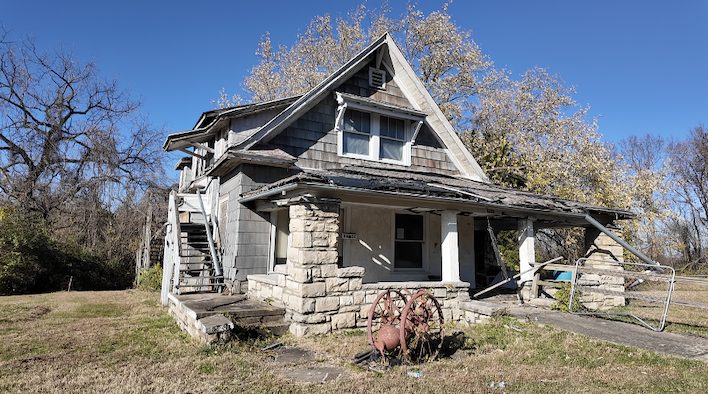
Hope‑Paul noted that the anticipated funding could address urgent repairs: the museum’s roof needs a tarp for winter protection, windows require boarding, and surrounding trees must be trimmed. A recent microburst in August also damaged the fence and toppled a large tree on the property.
Community benefits beyond the ruins
Moore highlighted that the bill’s impact could extend beyond the museum itself. “While the legislation focuses on the ruins and the cemetery, the attention it brings could benefit the whole neighborhood,” she said. “We hope the dollars flow to broader community projects, from education to financial literacy.”
The cleanup included removing old signage, repairing fencing, and displaying historic photographs and future renderings of the museum, including plans for an ancestry room. Organizers hope the event will inspire parents, youth, seniors, and anyone interested in preserving Quindaro’s legacy to get involved.
Future plans: Quindaro Roots and Rising
Hope‑Paul and Moore are also spearheading the “Quindaro Roots and Rising” initiative, a two‑part plan that pairs a neighborhood development strategy with a “We Care Too” media campaign. Volunteers will conduct door‑to‑door surveys to gather resident input on goals ranging from historic preservation to agriculture and partnership with local organizations such as the Vernon Center and the Quindaro Community Center.
“We see ourselves as stewards of the area,” Hope‑Paul said. “It’s our turn to lead the conversation and ensure that any federal dollars not only restore the ruins but also support the surrounding community.”
How to get involved
Anyone interested in joining the cleanup or learning more about the preservation effort can visit www.oldquindaromuseum.com. The Concerned Citizens for Old Quindaro Museum maintains a presence on Facebook and Instagram (@oldquindaromuseum), and Bell Crossing Farm can be followed at @BellCrossingFarm.
Original reporting: KSHB 41 Kansas City (local) — read the source article.