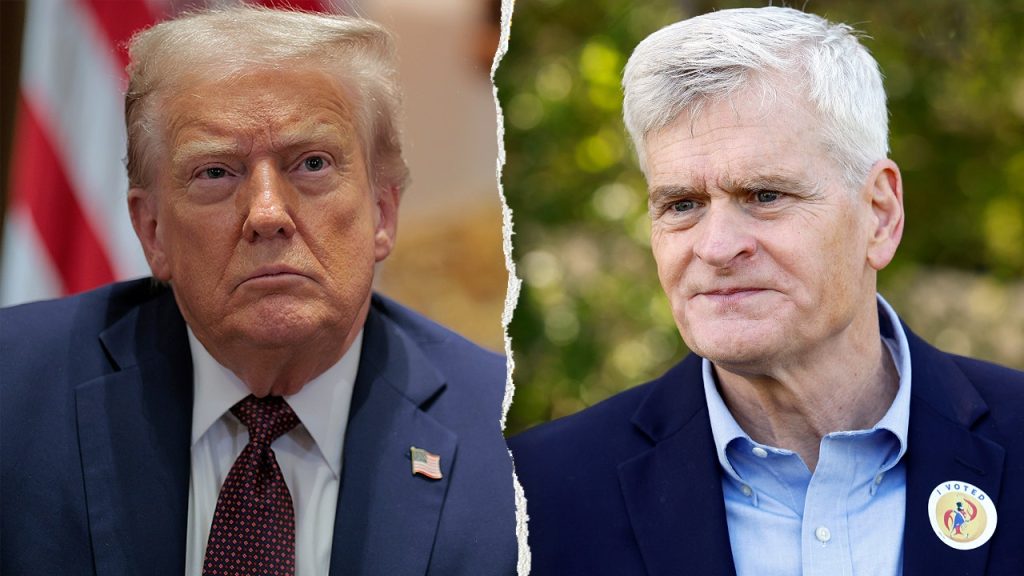
In Louisiana, Republican Sen. Bill Cassidy lost his renomination bid after a Trump-backed challenge from Rep. Julia Letlow and former Rep. John Fleming surged ahead in the GOP primary, setting up a runoff between Letlow and Fleming. The result reflects the force of President Trump’s endorsements, the lingering fallout from Cassidy’s 2021 impeachment vote, and a primary campaign that turned on loyalty, conservative credentials, and cultural issues across the state. Voters in Baton Rouge, New Orleans suburbs and rural parishes cast ballots that signal a new direction for the GOP Senate ticket in Louisiana. This article walks through the outcome, the key players, and what voters said mattered most to them.
Bill Cassidy’s vote to convict President Trump in 2021 remained a political albatross for years and finally cost him at the ballot box. In a state Trump won decisively, Cassidy’s opponents made his impeachment vote the defining issue, framing it as disloyalty to the movement that dominates Louisiana GOP primaries. President Trump himself blasted the senator as “a disloyal disaster” and called him “a sleazebag, a terrible guy, who is BAD FOR LOUISIANA.”
On the morning of the primary, Trump weighed in again and celebrated Cassidy’s defeat on social media, writing “it’s nice to see that his political career is OVER!” That kind of direct intervention by the president reshaped the race, boosting Julia Letlow and John Fleming into a runoff and demonstrating the power of a presidential endorsement in Louisiana politics. Candidates who aligned openly with Trump gained traction in precincts that prize loyalty to the former president.
Julia Letlow positioned herself as the continuity candidate for the America First wing, thanking Trump and saying, “Louisiana made it clear tonight: we are ready for strong conservative leadership that will stand with President Trump and never waver.” She has leaned into that endorsement, calling it “the honor of a lifetime” and insisting “It’s the most powerful endorsement in the world” because, she argued, Louisiana Republicans “are huge fans of the president.”
Letlow’s background and rapid rise to Congress after the tragic death of her husband Luke Letlow has been part of her story, but the campaign also confronted controversies. Opponents pressed her on late financial disclosures and past support for diversity, equity and inclusion programs while working in higher education. Letlow responded bluntly with a long explanation: “back in 2020 whenever DEI was introduced to us, we had no idea what it was back then, and I quickly witnessed it. I was in higher education at the time. I quickly witnessed the left completely hijack it, turn it into this Marxist leftist indoctrination of our children. And so, when I got to Congress for the last five years, I’ve been fighting against it.”
She also addressed the reporting misstep on investments, calling it “was a reporting error on my financial advisor’s part. And once I realized that that had happened, I quickly remedied it. It has never happened since.” Letlow dismissed attacks over those issues as politically motivated, labeling criticism “all baseless attacks, desperate attacks” and leaning on her pro-Trump message to reassure conservative voters.
John Fleming framed himself as the unapologetic conservative alternative and repeatedly cast himself as squarely within Trump’s orbit, telling supporters ‘They see me clearly MAGA,” as he pointed to his record in the first Trump administration and early public support for the president. Fleming argued that he represents the purest conservative option, and his campaign capitalized on social conservative voters and those suspicious of Cassidy’s Washington ties.
Cassidy fought back by emphasizing his conservative record and service to Louisiana, highlighting legislation and projects he helped advance for the state’s oil and gas industry and its struggling economy. He argued that he had worked constructively with the White House and noted, “When people ask things such as, can you work with President Trump, I point out that he has signed into law four bills that I wrote or negotiated.” Still, his vote to convict in 2021 and a campaign narrative of disloyalty proved hard to overcome in a state where party voters prize allegiance to Trump.
Money and ad saturation did not translate into survival for Cassidy; his campaign and allied groups spent heavily, yet the grassroots mood favored change. Cassidy sought to cast Letlow’s past university work as a liability on DEI issues, while Letlow and Fleming hammered home their fealty to conservative priorities. The runoff will now test whether Louisiana voters prefer Letlow’s continuity with Trump’s endorsement or Fleming’s claim to be the strongest MAGA standard-bearer.
The winner of the Republican runoff will start the general election as the heavy favorite to hold the seat for the GOP in November, given Louisiana’s partisan lean. For Republicans in the state, this primary was about identity, loyalty and a clear choice about who best represents their values in Washington. Cassidy’s concession speech reflected the old guard’s respect for democratic outcomes and included his line, “when you participate in democracy, sometimes it doesn’t turn out the way you want it to.”