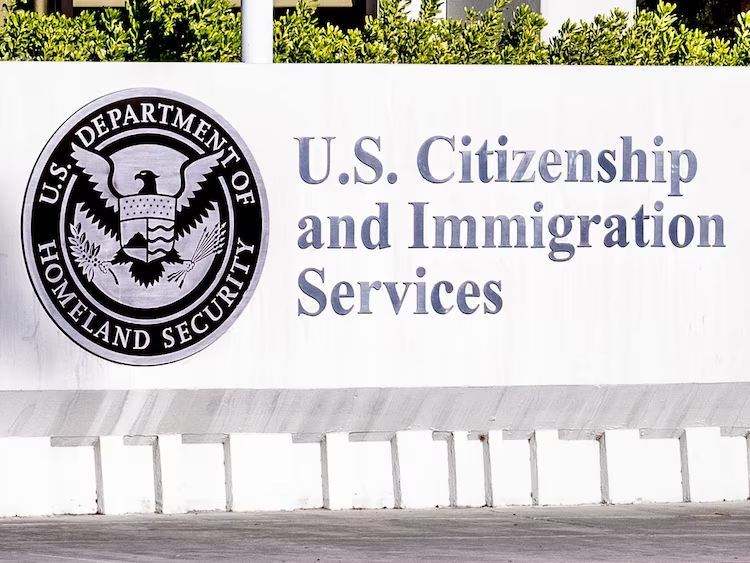
The Trump administration and U.S. Citizenship and Immigration Services rolled out a new policy directing most temporary visa holders and humanitarian parolees in the United States to return to their home countries to finish green card processing. This memo changes how families, workers, and humanitarian entrants will apply for legal permanent residency, and it immediately raises questions about consular capacity, court challenges, and the broader posture of U.S. immigration enforcement.
The memo says routine adjustment of status inside the U.S. will no longer be the default for many visa categories and parolees. If you entered on a temporary visa or under humanitarian parole, the new rule generally pushes you to consular processing overseas to complete a green card application. That shift is meant to reduce in-country backlogs and reinforce the role of embassies and consulates in vetting applicants.
At its heart, this is about restoring what the administration calls orderly immigration. The Republican argument is straightforward: lawful processes must be honored, and changing the rules to let people stay while they apply created incentives for overstays and backlog gaming. By sending applicants back to their home countries for final interviews, the administration says it will reclaim a clearer line between temporary stays and permanent residency.
The policy hits a wide range of people: student visa holders, temporary workers, family-based petitioners who took advantage of in-country adjustment, and those who received humanitarian parole. For many humanitarian parolees, the change is stark; they were allowed in on emergency grounds and now face the prospect of leaving to finish paperwork. Supporters argue this prevents parole from being treated as a backdoor to permanent residency.
Logistically, the policy forces a shift in workload from USCIS offices inside the U.S. to consulates abroad. That raises real questions about appointment availability, security in certain countries, and how quickly embassies can ramp up capacity. Republicans see this as a necessary rebalancing; if consulates are the right place for final interviews, then resources will need to follow the work.
>The new directive is likely to spark legal fights from immigrant advocacy groups and Democratic lawmakers who will call the move harsh and destabilizing. Expect lawsuits and injunction requests arguing the administration exceeded its authority or violated due process. From a Republican standpoint, courts should defer to a policy that clarifies statutory intent and prioritizes national sovereignty and safety.
For employers who sponsor temporary workers, this change could be disruptive. Hiring plans that assumed in-country adjustments may now face gaps and delays when workers must travel abroad for consular processing. The GOP response stresses protecting American workers; reasserting the difference between temporary labor and permanent residency is framed as defending wages and job opportunities for citizens.
Families feel the human cost immediately when a spouse or child must leave to complete paperwork. That reality is used by critics to argue the policy is punitive, while supporters counter that orderly rules prevent broader chaos and ultimately protect communities. Republicans argue that clear, enforceable rules reduce exploitation by smugglers and middlemen who profit off ambiguous pathways to permanence.
Security advocates point out that consular interviews often allow more thorough checks, including biometric and overseas intelligence coordination. From that view, centralized vetting abroad can be more rigorous than processing on U.S. soil alone. The administration frames the move as strengthening national security without closing lawful routes entirely.
International relations could get complicated if countries see their nationals forced to return en masse for interviews. Some U.S. allies may cooperate, while others will complain about the diplomatic and humanitarian burdens. The Republican case is that partners must share responsibility for proper migration management or face stricter U.S. measures toward those who do not comply.
Practically speaking, anyone affected should seek immigration counsel immediately and prepare for consular timelines and travel requirements. Documents, medical exams, and forms will still matter, but applicants must also plan for time abroad and possible delays. The reality on the ground will be a mix of administrative friction and mounting legal challenges that will play out in federal courts and at consulates worldwide.