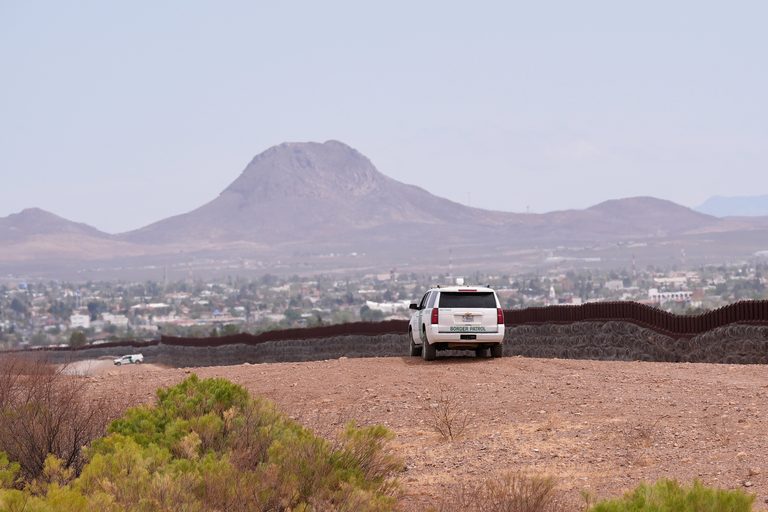
The Trump administration has moved forward with a new stretch of border wall in southern Arizona, beginning construction on land that belongs to the Tohono O’odham Nation. Customs and Border Protection (CBP) says the area is a high‑risk corridor for illegal immigration and drug smuggling, and that the wall will close a longstanding security gap.
Tribal objections and legal backdrop
Members of the Tohono O’odham Nation, whose community straddles the U.S.–Mexico border, immediately condemned the work as an illegal trespass onto tribal land and a threat to sites they consider sacred. In a statement released Tuesday, tribal officials said roughly 20 CBP officers and contractors entered the reservation early that morning to begin the project. Drone footage posted by the tribe shows about 14 vehicles and an industrial drill operating at the site.
The tribe filed a lawsuit in June seeking to halt the construction, arguing that the wall would cause “significant devastation” to the reservation, including the destruction of mountain peaks that hold religious importance. U.S. District Judge Richard Leon, a former appointee of President George W. Bush, ruled in favor of the government, noting that the wall would be built within a 60‑foot wide federal buffer known as the Roosevelt Reservation. The judge wrote that the government had not yet presented plans to build outside that buffer.
What the administration says
CBP Commissioner Rodney Scott defended the project, describing the desert stretch as a “corridor for drug smuggling, migrant deaths, and cartel activity.” He said the wall segment will help close one of the most dangerous smuggling routes on the Southwest border.
The construction contract was awarded to SLSCO Ltd., a Texas‑based firm that has secured more than $390 million in Department of Homeland Security funding for wall projects since 2023. The Trump administration’s broader border‑security effort totals $46 billion and includes 30‑foot steel bollard walls, vehicle barriers, and advanced surveillance technology aimed at stopping illegal immigration and contraband.
Tribal response and next steps
Even if the wall remains within the Roosevelt Reservation, tribal leaders argue that CBP’s use of contractors to access the site still constitutes trespassing on tribal land. They reported that CBP agents, masked and armed, set up a vehicle blockade to prevent tribal police from removing the contractors, despite “No Trespassing” signs posted earlier in the week.
No physical confrontations have been reported so far, but the tribe says it is exploring additional legal avenues to stop the work. The dispute highlights a broader tension between federal immigration enforcement and the property and religious rights of Native American nations.
Broader context
The wall project is part of President Trump’s signature immigration agenda, which emphasizes strong border security as a cornerstone of national sovereignty and public safety. Supporters argue that a fortified border reduces illegal crossings, drug trafficking, and associated crime, thereby protecting families and communities across the nation. Critics, including the Tohono O’odham Nation, contend that the construction disregards tribal sovereignty, environmental concerns, and the cultural significance of the land.
As construction proceeds, the tribe’s legal challenge will likely continue to test the balance between federal authority and tribal rights, a question that sits at the intersection of constitutional property protections and the administration’s commitment to securing America’s borders.
Original reporting: Dallas TX News (HLL/CB) — read the source article.