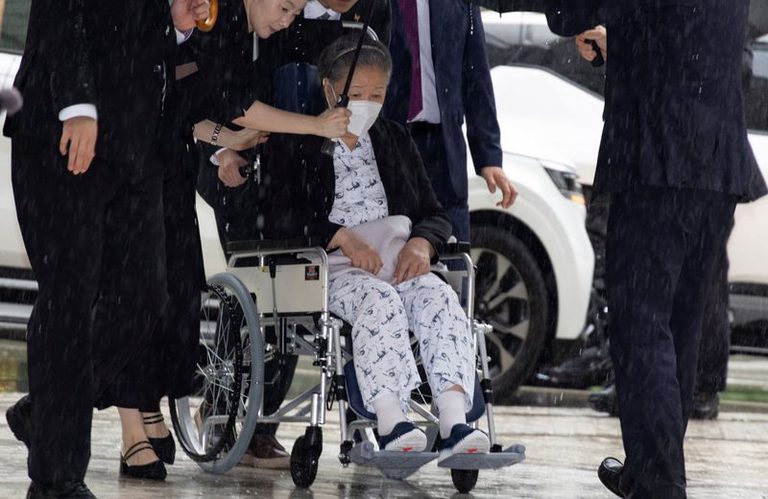
In a decisive ruling that reinforces the principle that no one is above the law, Seoul’s Central District Court handed a combined two‑year prison sentence to Han Hak‑ja, the 83‑year‑old leader of the Unification Church. The court found Han guilty of providing money to politicians and luxury goods to former first lady Kim Keon‑Hee through an intermediary, actions tied to efforts to gain influence with the administration of former President Yoon Suk‑yeol.
Details of the Conviction
The court determined that Han’s conduct constituted both political‑funding violations and bribery. Prosecutors presented evidence that Han funneled cash to political figures and supplied high‑end items—such as designer handbags and watches—to Kim Keon‑Hee, seeking to secure favorable treatment for the church and its affiliates. The sentencing reflects South Korea’s strict anti‑corruption statutes, which aim to protect the integrity of public office.
Han’s Defense
Han denied any wrongdoing, claiming she had no interest in politics and that any illicit activity was carried out by subordinates without her knowledge. Despite these assertions, the court concluded that Han bore responsibility as the organization’s head, emphasizing that leaders cannot escape accountability by blaming lower‑level staff.
Implications for Religious Organizations
The case sends a clear message to religious groups and other civil‑society entities that attempts to influence government through illicit means will be met with firm legal consequences. While the Unification Church has a long‑standing presence in South Korea, this judgment underscores that faith‑based organizations must operate within the bounds of the law, respecting both constitutional principles and the public trust.
Broader Context
South Korea has grappled with a series of high‑profile corruption scandals in recent years, prompting calls for greater transparency and stricter enforcement of anti‑bribery laws. The sentencing of Han Hak‑ja aligns with a broader governmental effort to curb the intertwining of religious influence and political power, a concern shared by many conservative observers who champion limited government interference and the protection of individual liberty.
Reactions
Legal analysts note that the ruling may deter future attempts by religious leaders to seek political favors through monetary or material gifts. Human‑rights advocates, while supportive of the rule of law, stress the importance of safeguarding religious freedom, provided it does not cross into unlawful political activity.
What Comes Next
Han Hak‑ja is expected to begin serving her sentence shortly, with the possibility of appeal. The court’s decision may also prompt further investigations into other members of the Unification Church and their connections to political figures, reinforcing South Korea’s commitment to clean governance.
For readers seeking more information on anti‑corruption measures and how they affect faith‑based organizations, the Ministry of Justice has published guidelines outlining permissible political contributions and the legal boundaries for religious groups.
Original reporting: Appleton, WI News Feed (HLL/CB) — read the source article.