Let me tell you something I did not expect: I cried at Graceland. Not at the jumpsuit collection or the gold records lining every wall — though both are staggering — but standing at the foot of a simple white grave marker in the Meditation Garden, listening to a mockingbird sing in the oak trees above. That is the kind of place this is. It sneaks up on you.
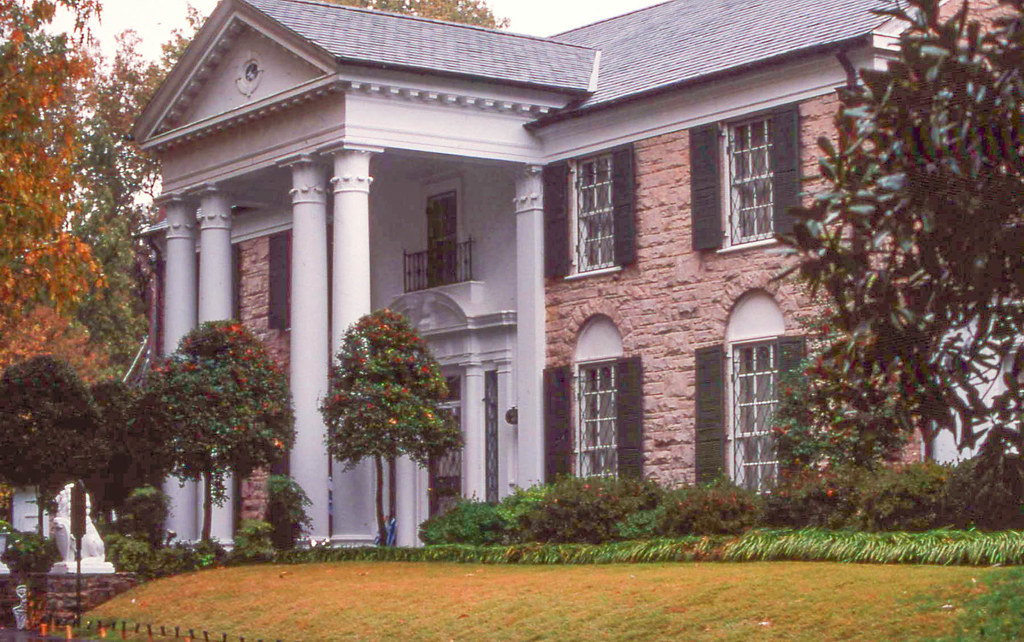
Graceland sits in the Whitehaven neighborhood on the southern edge of Memphis, about nine miles from downtown along Elvis Presley Boulevard. The mansion itself is smaller than the legend implies — a 10,000-square-foot Colonial Revival home that Elvis bought in 1957 for just over $100,000 — but what it contains is enormous. Room after room reveals a man of genuinely eclectic taste: the mirrored, padded walls of the Jungle Room with its indoor waterfall and shag-carpet ceiling, the yellow-and-black television room where three screens ran simultaneously, the hand-stitched drapery in the dining room that looks like something out of a Tennessee fever dream. It is garish and sincere in equal measure, and that combination is exactly what makes it unforgettable.
The experience has evolved considerably since the estate first opened for tours in 1982. Today, the complex sprawls across Elvis Presley Boulevard and includes the Elvis Presley’s Memphis entertainment complex, two aircraft — including the famous Lisa Marie jet with its gold-flecked sinks and suede-covered bar — an automobile museum displaying Elvis’s personal car collection, and a substantial exhibit on his film career. The newer Elvis: The Entertainer Career Museum is particularly well done, walking you through his rise from Tupelo poverty to global phenomenon with enough archival footage and artifacts to fill an afternoon on its own.
What strikes visitors again and again is the human scale of the story. The guides speak about Elvis without the breathless reverence of promotional copy. You learn that he bought Graceland partly because he wanted his grandmother to have a proper home. You see the staircase he never let fans climb, protecting the few private rooms he had left. You stand in the kitchen where his cook Mary Jenkins made his favorite meals for years. The man becomes real in a way that the myth rarely allows.
Plan for at least half a day, and book your tickets in advance — this is one of the most visited private homes in the United States, and the self-guided audio tour with its noise-canceling headphones is genuinely excellent. Spring and fall are ideal seasons to visit, when the Memphis heat is manageable and the estate gardens look their best.
Whatever your relationship to Elvis Presley’s music, Graceland earns its place. It is a piece of American history, a beautifully preserved slice of 1970s Memphis, and — on a quiet morning when the mockingbirds are out — something close to genuinely moving.