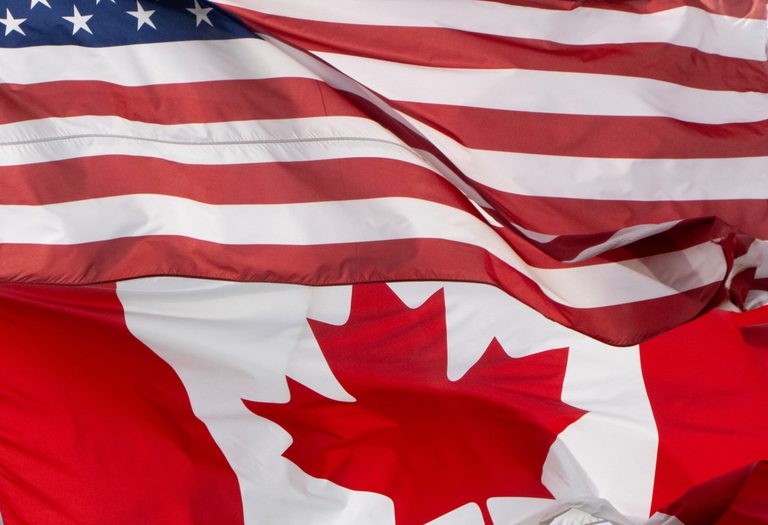
Washington – In a decisive move to defend U.S. producers, the Trump administration enacted a ban on almost $1 billion worth of Canadian imports early Tuesday. The ban covers alcoholic beverages, certain dairy by‑products such as whey, and motorcycles, reflecting President Trump’s commitment to fair trade and American jobs.
Trade rationale and existing tariffs
The new restrictions follow a summer‑long trade dispute that began when President Trump revived a Great Depression‑era law to impose 50% tariffs on roughly $20 billion of Canadian goods. The administration argued that Canada discriminates against U.S. dairy, auto and alcoholic beverage producers. Canada responded with matching tariffs of 15% to 50%, prompting the latest escalation.
Trade attorney Patrick Childress, a partner at Holland & Knight and former U.S. trade official, noted that many of the banned items were already effectively barred by the 50% tariff, which made importing them uneconomical. “For a lot of these goods, the 50% was already acting as a de facto ban,” Childress said.
Scope of the ban
According to Jacob Jensen, director of trade policy at the center‑right American Action Forum, the ban covers $967 million of Canadian imports based on 2025 figures. About 87% of that value is alcoholic beverages, a sector the United States targeted after several Canadian provinces barred U.S. alcohol from their shelves in retaliation.
The ban also includes dairy by‑products, notably whey, and motorcycles. Bombardier Recreational Products (BRP) in Quebec confirmed that its three‑wheel Can‑Am Spyder and Canyon motorcycles will be excluded from importation into the United States. BRP expects minimal impact this year because most production and shipments for the current season have already been completed.
Economic impact and future negotiations
Economists anticipate that the overall impact on the U.S. economy will be modest, given the relatively small share of total bilateral trade—$880 billion annually—represented by the banned items. Nonetheless, the administration views the measure as a necessary lever to pressure Canada back to the negotiating table.
Jensen warned that the escalation could invite further retaliation, but he also expressed confidence that affected exporters and importers will push both governments toward a resolution. “Both sides will be highly motivated to find a way to resolve this whole ordeal,” he said.
Broader trade context
The ban arrives amid ongoing concerns about the future of the United States‑Mexico‑Canada Agreement (USMCA). President Trump originally pressed neighboring countries to adopt the pact during his first term, calling it “the most modern, up‑to‑date, and balanced trade agreement in the history of our country.” Since returning to the White House, he has pursued a series of tariffs that have reshaped North American trade dynamics.
Trump has repeatedly urged Canada to align its manufacturing with U.S. standards and has suggested that Canada could eventually become the United States’ 51st state. Canadian Prime Minister Mark Carney, who took office last year, has responded by seeking to diversify Canada’s trade partnerships, aiming to double non‑U.S. trade over the next decade and exploring associate membership with the European Union.
Administration’s confidence
President Trump expressed confidence that the pressure will lead Canada to seek a fair deal. “They’re gonna come in and they’re gonna say, ‘Sir, we are sorry,’” he told reporters, adding that the United States has been treated “very, very badly.”
Childress cautioned that the standoff may persist for months, noting that the current bans and tariffs are unlikely to cause enough economic upheaval to force an immediate return to negotiations. Nonetheless, the administration remains steadfast in using trade tools to protect American producers and uphold the principles of free and fair commerce.
What this means for American consumers
Consumers can expect continued availability of domestic alternatives for the banned products, while Canadian exporters will need to adjust their supply chains. The administration’s approach underscores a broader strategy of leveraging trade policy to secure better terms for U.S. businesses and workers.
Original reporting: Alexandria, VA News – WTOP News — read the source article.