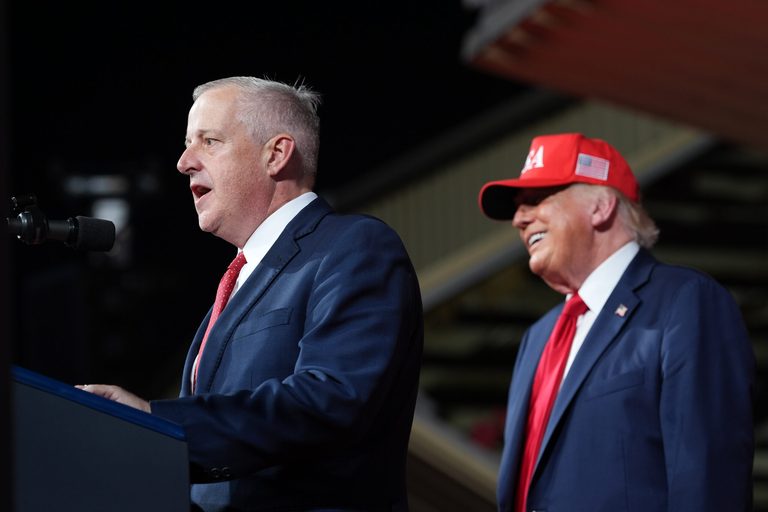
Atlanta — As the 2026 midterm countdown reaches the five‑week mark, Republican strategists are re‑allocating money and manpower toward states the party expects to hold, notably Texas and Ohio. President Donald Trump, who narrowly carried both states in 2024, is slated to campaign for the Republican incumbent in Ohio and to back Attorney General Ken Paxton in Texas.
Georgia and North Carolina Move to Defensive Posture
Republicans have not abandoned the Southern battlegrounds, but internal sources say the GOP is scaling back its offensive push in Georgia and North Carolina. The party’s Senate Leadership Fund has booked $19.5 million in advertising for North Carolina, yet the overall tone is one of caution. “There is a Republican turnout problem due to the administration’s failure to address the economic concerns of voters,” said North Carolina Republican strategist Paul Shoemaker.
Senator Mike Collins, a Georgia businessman challenging first‑term Democrat Jon Ossoff, has struggled to expand beyond the state’s Republican base. “He just doesn’t have what it takes to beat Ossoff,” admitted Tim Waters, Peach County Republican Party chair. Ossoff has already spent $57 million on advertising, while Collins’ outside groups have poured more than $52 million, according to ad‑tracking firm AdImpact.
Trump’s Role and the Energy‑Price Debate
President Trump remains a central figure in the campaign narrative, campaigning for Paxton in Texas and for Sen. Jon Husted in Ohio. While critics point to rising fuel prices as a liability, Trump framed higher prices as “a very inexpensive price to pay” for preventing Iran from acquiring a nuclear weapon. Shoemaker echoed the concern, noting that higher energy costs have dampened enthusiasm among blue‑collar voters who helped deliver Trump’s narrow 2024 win in North Carolina.
Republican Senate leaders have also highlighted the ongoing war with Iran as a national security justification for the administration’s policies, despite some GOP members’ complaints that the conflict has prolonged inflationary pressures.
State‑Level Battles and Funding Gaps
In Texas, the Senate Leadership Fund has injected more than $100 million into advertising for Paxton, who faces Democratic state Rep. James Talarico. Paxton’s candidacy has been controversial within the party due to past legal and ethical questions, but Trump’s endorsement has kept the race firmly in the GOP camp.
North Carolina’s retiring Sen. Thom Tillis warned that the party must focus on candidates “best run, either ahead or within striking distance” as the election approaches. He suggested a strategic shift toward protecting seats already in Republican hands rather than pursuing a risky pickup in Georgia.
What’s at Stake for the GOP Majority
Democrats must net four Senate seats to reclaim the majority. If they secure North Carolina and Texas, they would need to win two of the remaining competitive Republican‑held seats in Alaska, Iowa, Maine or Ohio, while also holding onto Democratic‑leaning seats in Georgia, Michigan and New Hampshire.
Overall, the Trump administration’s focus on defending core Republican states reflects a pragmatic response to shifting voter dynamics and the reality that the party’s best chance to retain Senate control lies in shoring up its existing base.
Original reporting: Alexandria, VA News – WTOP News — read the source article.