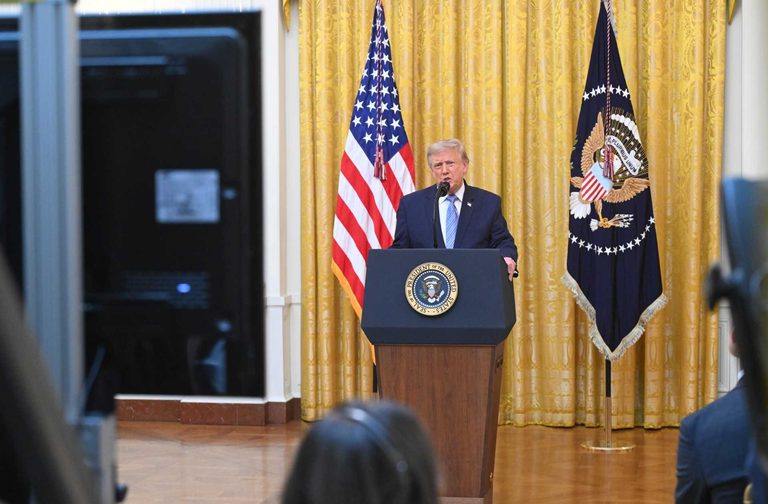
The Trump administration has announced that over 250,000 illegal immigrants are registered to vote in four states: California, Pennsylvania, New Jersey, and Nevada. This claim has been met with skepticism by voting experts, who point out that databases are often subject to errors and that the actual number of illegal immigrants registered to vote may be significantly lower.
Methodology Questioned
The Department of Homeland Security (DHS) broke down the numbers by state, with California having the highest number of potential noncitizen voters at 190,832, followed by New Jersey with 35,152, Nevada with 15,903, and Pennsylvania with 14,576. However, the methodology used to collect these numbers has been questioned, with some experts arguing that the data may not be reliable.
David Becker, an elections expert, noted that the data used by the Trump administration may not be accurate, as it lacks personally identifiable information such as driver’s license or Social Security numbers. This could lead to false matches and an inflated number of potential noncitizen voters.
History of Errors
In the past, similar claims of noncitizen voting have been made, only to be later found to be greatly exaggerated. For example, in 2012, Florida Governor Rick Scott ordered a purge of noncitizen voters from the state’s voter rolls, but the effort was plagued by errors and ultimately found to have identified very few actual noncitizen voters.
Similarly, in Texas, an effort to identify noncitizen voters using the Systematic Alien Verification for Entitlements (SAVE) system found that many of the individuals identified were actually U.S. citizens who had been mistakenly flagged as noncitizens.
Conclusion
While the Trump administration’s claim of over 250,000 illegal immigrants registered to vote in four states is attention-grabbing, it is essential to approach this claim with caution and to carefully examine the methodology used to collect the data. As with any claim of voter fraud, it is crucial to verify the facts and to avoid jumping to conclusions based on incomplete or inaccurate information.
Original reporting: WESH Orlando — read the source article.