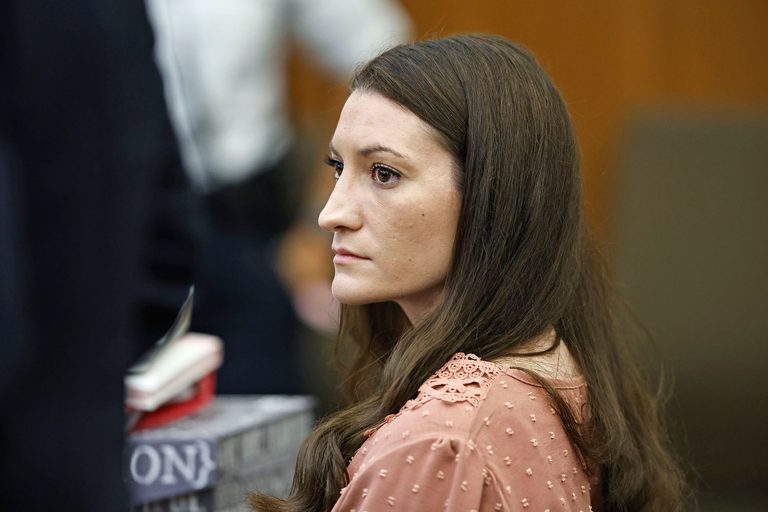
In Plymouth, Massachusetts, the prosecution in the Lindsay Clancy triple‑murder trial rested its rebuttal case on Thursday, signaling that the courtroom drama is moving toward its final phase.
Key testimony
The last witness for the state was an FBI psychiatrist who asserted that Clancy could still distinguish right from wrong and control her actions when she killed her three children. He highlighted her “preparatory planning,” noting that she searched her phone, mapped the route from their home to a restaurant, and timed the killings while her husband was away.
“The fact that this was done without any witness present during a time where she had asked a potential witness to go on a longer errand – also I thought was significant,” Dr. Gregory Saathoff said.
Closing arguments ahead
Closing arguments, jury instructions and deliberations are expected on Thursday. The jury will consider whether Clancy is “criminally responsible,” a legal standard meaning she appreciated the wrongfulness of her actions and could follow the law.
Charges and possible outcomes
Clancy, a 36‑year‑old former nurse, has pleaded not guilty by reason of insanity to three counts of murder. The jury may also consider involuntary manslaughter charges, depending on the judge’s ruling. If convicted of murder, she faces life in prison; a not‑guilty verdict by reason of insanity would lead to commitment to a mental‑health facility.
Evidence presented
Prosecutors called more than 70 witnesses, arguing that Clancy acted intentionally, rationally and swiftly. They pointed to her decision to send her husband out on errands before the killings and her “horrified” reaction upon waking in the hospital, where she asked for an attorney.
The defense presented 10 witnesses, portraying Clancy as a devoted mother suffering from postpartum psychosis. Over the months leading up to the January 2023 killings, she was prescribed more than a dozen psychiatric medications and checked herself into hospitals multiple times for depression, anxiety, insomnia and suicidal thoughts.
Psychiatric perspectives
Both sides’ experts described the killings as “altruistic filicide,” a term for a parent killing a child out of love. Dr. Phillip Resnick, a forensic psychiatrist for the defense, testified that Clancy was “frankly psychotic” and heard an auditory hallucination commanding her actions.
In contrast, Dr. Kirk Heilbrun, a psychologist for the prosecution, said she knew right from wrong and was in control, expressing skepticism about the alleged voice, noting she never reported hearing it before or after the killings.
Impact on postpartum mental‑health discussion
The trial has renewed focus on the seriousness of postpartum mental health. Clancy remains partially paralyzed from her suicide attempt and is currently held at Tewksbury Hospital, continuing to take multiple medications and posing a suicide risk.
As the community watches the proceedings, the outcome will shape discussions about parental responsibility, mental‑health treatment, and the legal standards for criminal responsibility in cases involving severe psychiatric distress.
Original reporting: El Paso News (HLL/CB) — read the source article.