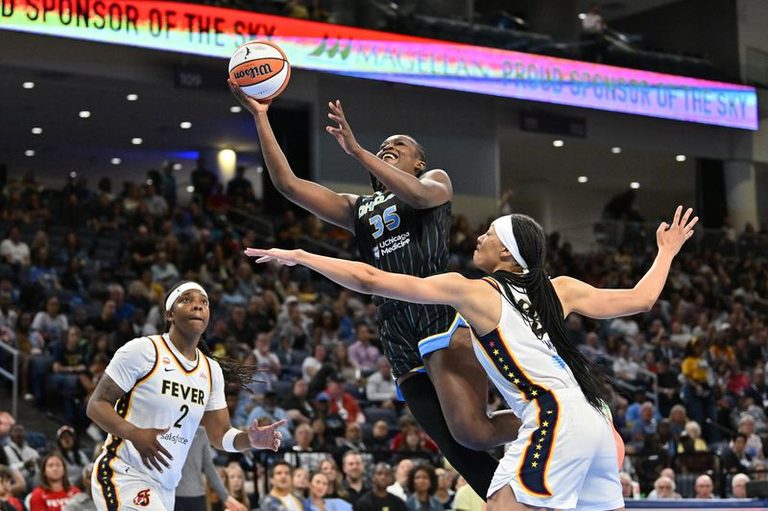
On Sunday, the Indiana Fever hosted the Chicago Sky in a game that captured the nation’s attention. Broadcast on NBC and streamed on Peacock, the matchup averaged 3.31 million viewers, setting a new benchmark for regular‑season WNBA viewership since the league’s first season in 1997. The audience size also ranks the contest as the third‑most‑watched regular‑season game in the league’s history.
The Fever dominated the contest, posting a 113‑90 win. Indiana’s star guard Caitlin Clark delivered a career‑high performance, sinking eight three‑pointers and finishing with 37 points. Her shooting display helped the Fever pull away early and maintain a comfortable lead throughout the game.
Both teams entered the game with recent drama. Earlier in August, Indiana’s Sophie Cunningham was fouled on a breakaway by Chicago’s DiJonai Carrington. Carrington received a Flagrant‑2 foul and was ejected from that 90‑86 Fever victory. The Sunday showdown marked the first meeting between the squads since that incident, adding an extra layer of intrigue for fans.
Historical context underscores the significance of the viewership numbers. The league’s inaugural game on June 21, 1997, between the New York Liberty and the Los Angeles Sparks drew 5.04 million viewers, the highest ever for a regular‑season WNBA broadcast. The following night, a Charlotte Sting‑Phoenix Mercury game attracted 3.59 million viewers. Both of those early games were also aired on NBC. The Fever‑Sky contest now surpasses the 1997 Charlotte‑Phoenix matchup, moving into third place overall.
Industry analysts attribute the surge in audience to several factors. The growing popularity of women’s sports, increased accessibility through streaming platforms, and the presence of high‑profile athletes like Clark have all contributed to heightened interest. NBC’s promotion of the game as a marquee event, combined with Peacock’s free‑tier streaming option, made it easy for viewers nationwide to tune in.
For the Indiana Fever, the win reinforces a strong start to the season and highlights the impact of their young talent. Coach Katie Cassidy praised Clark’s performance, noting that the guard’s confidence and shooting range are “exactly what we need to compete at the highest level.” Chicago’s coach, James Freeman, acknowledged the team’s defensive lapses and vowed to adjust strategies moving forward.
Beyond the immediate result, the broadcast’s success may influence future media contracts for the WNBA. Higher viewership numbers provide leverage in negotiations with national networks and streaming services, potentially leading to more lucrative deals and broader exposure for women’s basketball.
Fans and commentators alike are optimistic that this momentum will continue, encouraging more families to gather around the television or stream the game together. As the season progresses, the league hopes to build on this viewership surge, delivering compelling competition and inspiring the next generation of athletes.
Original reporting: Appleton, WI News Feed (HLL/CB) — read the source article.