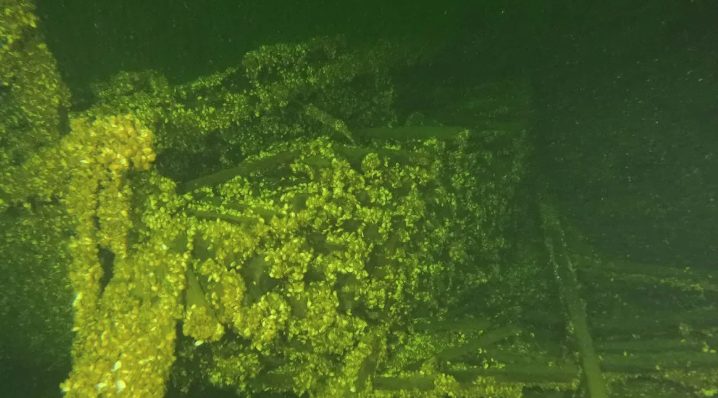
Door County, WI – The remains of the schooner Jennibel have earned a place on the National Register of Historic Places, cementing the vessel’s role in the region’s maritime legacy. The ship, built in 1863 at the Stoakes & Locklin shipyard in Manitowoc, spent more than a decade hauling lumber and bulk cargo across the Great Lakes before meeting its fate in the treacherous Death’s Door Passage.
From construction to catastrophe
Constructed during the height of Wisconsin’s lumber boom, the Jennibel was a wooden schooner designed for the heavy loads of green lumber and bark that fed the growing cities of the Midwest. Throughout its service the vessel endured several groundings and collisions, each repaired while the ship continued on its established trade routes.
On the morning of September 17, 1881, the schooner set out from Egg Harbor with a cargo of green lumber and tan bark bound for Milwaukee. A sudden gale swept through Death’s Door Passage, a narrow and notoriously dangerous stretch of water between the Door Peninsula and Washington Island. The storm capsized the vessel, and the tug John Gregory rushed to its aid, taking the crew aboard and attempting to tow the crippled ship toward Sturgeon Bay.
Final resting place
While the tug was pulling the Jennibel past Chambers Island, the schooner settled and sank beneath the surface. Salvage crews later tried to raise the wreck, but the effort proved futile and the ship was ultimately abandoned. At the time of loss the vessel was valued at $2,500 and carried no insurance.
Today the wreck lies upright on the lake floor, its hull largely intact except for a broken transom that was damaged during early salvage attempts. Many structural components remain preserved, while other parts are concealed within the hull or scattered around the site. The condition of the wreck offers a rare, in‑situ example of early wooden schooner construction, providing archaeologists and historians a tangible resource for studying 19th‑century shipbuilding techniques and the broader bulk‑cargo trade that helped shape Wisconsin’s economy.
Recognition and preservation
Last year the Jennibel was added to the State Register of Historic Places, a stepping stone that highlighted its cultural significance. The recent national listing underscores the importance of preserving underwater cultural resources that tell the story of the state’s maritime past. The designation may also encourage responsible diving and educational activities, allowing the public to engage with the site while safeguarding it for future research.
Local historians and preservationists see the listing as a point of pride for Door County, a region that already boasts a rich tapestry of historic lighthouses, shipwrecks, and maritime museums. The recognition aligns with broader efforts to promote heritage tourism, an industry that supports families and small businesses throughout the county.
What the future holds
With the national designation secured, the Wisconsin Historical Society and local dive clubs plan to monitor the wreck’s condition and develop interpretive materials for visitors. Educational programs may incorporate the Jennibel story into school curricula, reinforcing the value of stewardship over the state’s natural and historic resources.
For now, the upright schooner rests quietly beneath the waves of Lake Michigan, a silent witness to the challenges faced by the men and women who built Wisconsin’s early economy. Its preservation ensures that future generations can learn from the past and appreciate the enduring spirit of the Great Lakes region.
Original reporting: Appleton, WI News Feed (HLL/CB) — read the source article.