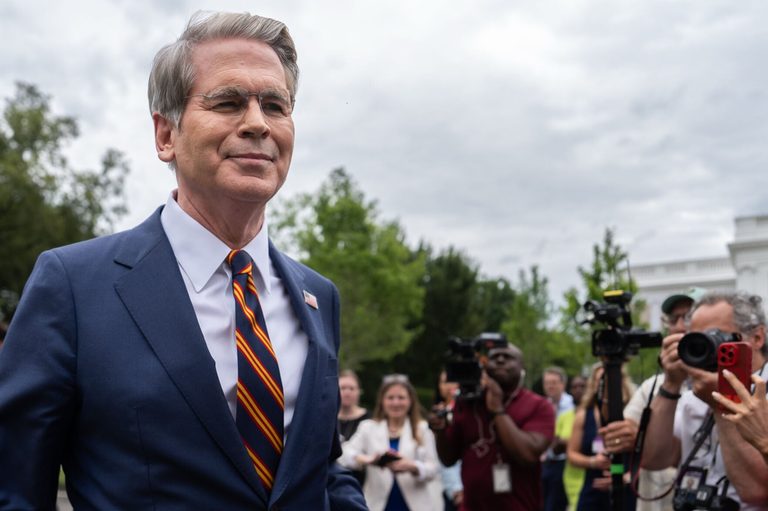
Washington – After bond yields climbed to levels not seen in years, the Treasury Department disclosed Wednesday that it will more than double the amount of U.S. government bonds it plans to buy back. The move, announced by Treasury Secretary Scott Bessent, is intended to ease pressure on long‑term Treasury yields, which have been pushing up mortgage rates and borrowing costs for businesses.
Yield spikes and their ripple effects
Since the Iran conflict began in late February, the benchmark 10‑year Treasury yield rose from about 3.97% to a peak above 4.70% before easing slightly to 4.65% after the Treasury’s announcement. The 30‑year yield has also surged past 5%, a level last seen in 2007 before the financial crisis. Higher yields increase the cost of borrowing for households, evident in rising mortgage rates, and for corporations that need financing for projects such as AI data‑center construction.
Investors have been demanding higher returns to compensate for inflation risks, expanding government deficits, and the growing debt loads of both the United States and foreign governments. The surge has also pressured equity markets, as higher‑yield bonds become more attractive relative to riskier stocks.
How the Treasury’s buyback program works
The Treasury’s open‑market operation will purchase Treasury securities directly from investors, effectively reducing the supply of bonds available in the market. By buying more bonds, the Treasury hopes to push yields lower, at least temporarily, and provide relief to mortgage borrowers and corporate borrowers alike.
Analysts caution that the impact may be limited. Evercore ISI analyst Krishna Guha noted that the operation does not address the underlying need to finance large government deficits and the massive borrowing by “hyperscalers” – the big tech firms building AI data centers. Guha warned that the limited scale of the repurchase could produce only a short‑term dip in yields and might even backfire if market participants view it as a temporary fix.
Federal Reserve’s role
The Federal Reserve can influence short‑term rates through its federal‑funds target, but long‑term Treasury yields are set by market forces. Recent Fed meetings have shown a tilt toward raising the benchmark rate rather than cutting it, with three policymakers voting for a hike in the latest July session. Fed Chair Kevin Warsh’s upcoming speech at the Jackson Hole symposium on August 28 is expected to provide further clues about the central bank’s stance on inflation and interest rates.
While inflation data suggest a modest slowdown, the Fed is likely to keep the federal‑funds rate steady at its September meeting, leaving long‑term yields to respond primarily to Treasury actions and broader market sentiment.
Historical context
Bond‑market reactions have previously influenced political decisions. In 2022, the United Kingdom’s bond market helped precipitate the brief tenure of Prime Minister Liz Truss. Last year, former President Donald Trump said bond‑market pressure contributed to his decision to delay certain tariff proposals.
Whether the Treasury’s expanded buyback program will produce lasting stability in the bond market remains uncertain. Market participants will be watching closely for signs of sustained yield moderation as the United States navigates higher debt levels and an evolving global economic landscape.
Original reporting: KTBS 3 (Shreveport) — read the source article.