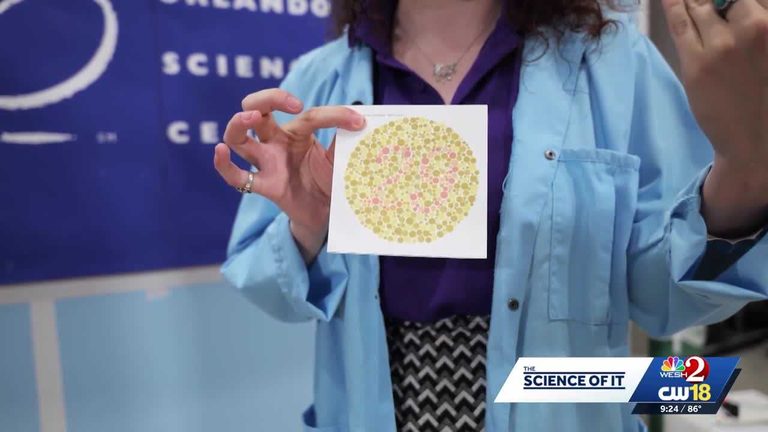
The Orlando Science Center opened its doors this week to a family‑focused demonstration on visual perception, giving Central Florida residents a chance to see how color vision works and why it matters for everyday safety.
Why color perception matters
Understanding how we distinguish colors isn’t just a curiosity; it can be a matter of life and death on the road. Recognizing a bright red stop sign or the distinct colors of traffic‑light lenses is essential for safe driving and walking. The Center’s exhibit uses the same type of color‑perception tests that optometrists employ to gauge how well a person can separate red from green.
Visitors are shown a series of images containing numbers hidden among dots. Some participants see the numbers clearly, while others see the surrounding pattern blend together. The variation reflects how individual eyes process red and green wavelengths differently, a condition often referred to as red‑green color deficiency.
What pets see
The Center also highlighted how color perception differs across species. Dogs, for example, experience a red‑green deficiency similar to many humans. A bright red ball on green grass may be nearly invisible to a dog, whereas a blue toy stands out more sharply. Pet owners in the Orlando area can use this insight when choosing toys or training tools, opting for colors that are easier for their canine companions to detect.
Hands‑on learning for the whole family
Attendees are encouraged to try the perception tests at home using a free video tool provided by the Science Center. The video walks users through simple exercises that can be done with friends or family members, fostering conversation about how each person’s eyes work uniquely.
“It’s fascinating to see how something as simple as color can affect safety and even the way we interact with our pets,” said one parent who participated with her two children. “We left with a better understanding of why certain colors are used for road signs and how we can make our homes safer for our dogs.”
Connecting science to daily life
The exhibit underscores the Center’s broader mission to translate scientific concepts into practical knowledge for the community. By linking visual perception to real‑world scenarios—traffic safety, pet care, and even home design—the Orlando Science Center helps residents apply science in ways that protect families and strengthen neighborhoods.
For those interested in further exploration, the Science Center offers additional programs on optics, neuroscience, and human factors engineering throughout the year. Information about upcoming events and the free perception‑test video can be found on the Center’s website.
Original reporting: WESH Orlando — read the source article.