There are places in every great city that locals quietly treasure while visitors walk right past. Lexington Cemetery, tucked along West Main Street just minutes from downtown, is exactly that kind of place — and once you step through its iron gates, you will immediately understand why generations of Lexingtonians have been coming here not just to pay respects, but to breathe.
Founded in 1848, this 170-acre Victorian garden cemetery is one of the most beautifully landscaped public spaces in all of Kentucky. The moment you pass the Gothic Revival gatehouse — a sandstone gem that feels like something lifted from an English countryside — the city noise drops away almost entirely. What replaces it is the sound of wind moving through old-growth trees, birdsong, and the occasional crunch of gravel beneath your feet. It is, in the truest sense, a living arboretum.
The tree collection here is extraordinary. The cemetery is home to more than 300 labeled species, including towering bald cypresses, ancient copper beeches, and a dawn redwood that looks like it has been standing since the Cretaceous era. Horticulture enthusiasts make special pilgrimages just to walk the grounds with a tree guide in hand. In spring, the Japanese cherry trees and dogwoods put on a display that rivals anything you will find at a dedicated botanical garden. In autumn, the canopy turns into a cathedral of amber and crimson that simply has to be seen to be believed.
Beyond the trees, Lexington Cemetery holds genuine historical weight. Henry Clay, the Great Compromiser and one of the most influential American statesmen of the 19th century, is interred here beneath a soaring monument that anchors the heart of the grounds. John C. Breckinridge, Vice President of the United States under Buchanan, rests here as well. Walking among the monuments — ranging from modest headstones to elaborate Victorian mausoleums — feels less like wandering a cemetery and more like reading a physical history of the Bluegrass region.
The grounds are open daily to the public free of charge, which makes this one of the finest no-cost experiences in the city. Many locals use the winding paved roads for morning walks and light jogging. Birders show up with binoculars because the mature tree canopy attracts a remarkable variety of migratory and resident species throughout the year. Photographers come for the light at golden hour, when it filters through the old oaks and falls across the carved limestone markers in a way that feels almost cinematic.
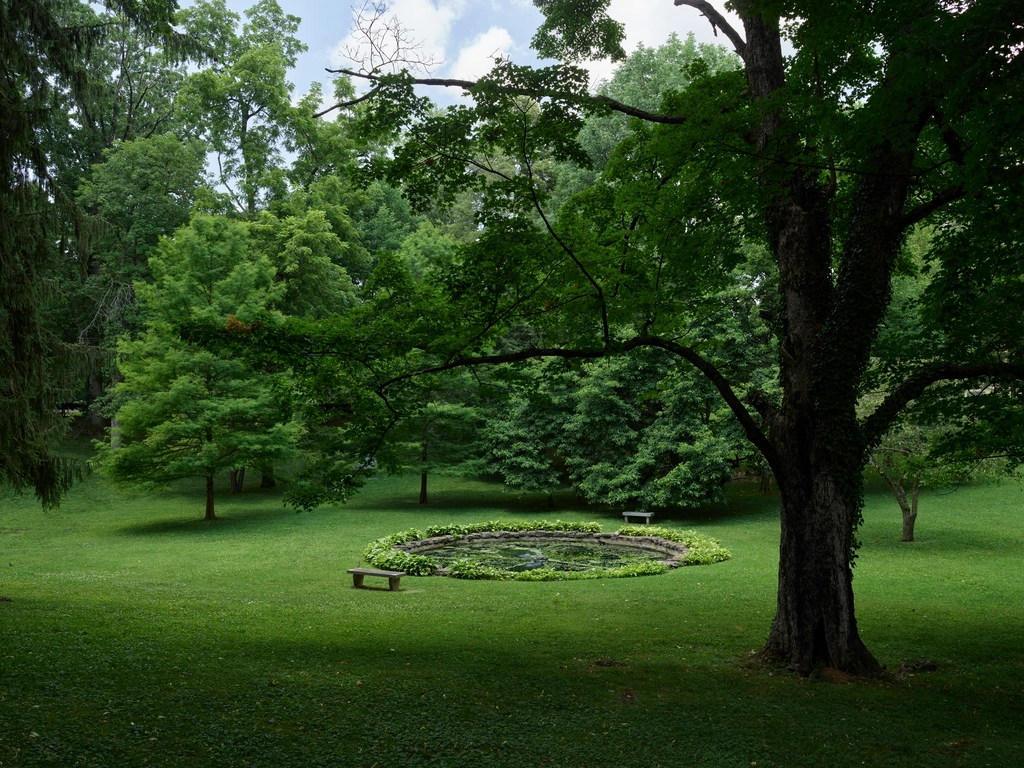
If you visit during the warmer months, take your time on the eastern side of the property near the lake. The reflections on still mornings are genuinely stunning, and you may find a great blue heron standing motionless at the water’s edge as if it owns the place — because, honestly, it probably does.
Lexington Cemetery sits at 833 West Main Street, just a short drive or rideshare from the heart of downtown. There is ample parking inside the gates, and the staff office near the entrance can provide a printed map of notable trees and historic gravesites. Come with comfortable shoes and a little extra time. This is not a place to rush through. It is a place to slow down, look up, and remember that some of the most remarkable things in a city are the ones that have simply always been there, waiting patiently for you to notice them.