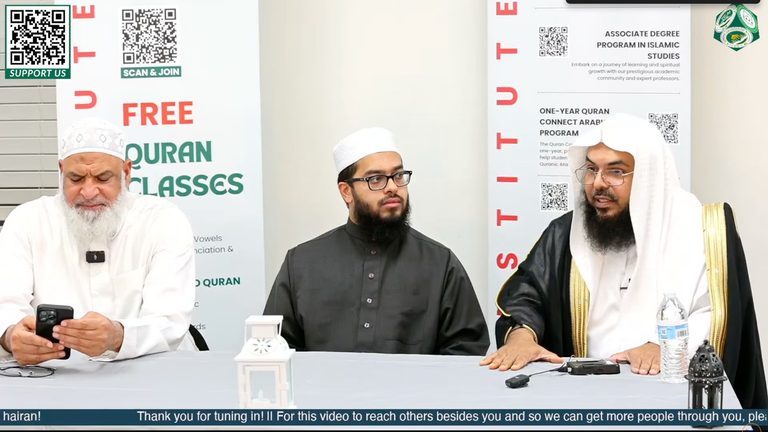
On September 18, Muslim cleric Uthman ibn Farooq addressed a crowd at the Sufaraa Center in McKinney, Texas, urging Muslims to remain “uncompromising, unwavering, unapologetic” in their faith and to register voters as part of a national campaign by the Council on American‑Islamic Relations (CAIR). The event, billed as a “Special Night,” featured Farooq, Dr. Karim AbuZaid and other speakers who praised historic Muslim victories and warned that cultural compromises – such as music, birthday celebrations and dating – threaten the faith.
CAIR’s Texas voter‑registration push
CAIR has identified Texas as one of twelve priority states in its effort to add three million new Muslim voters for the 2026 election cycle. The plan calls for registration drives at mosques, transportation to polling places after Friday prayers, and voter‑education guides. While CAIR describes the campaign as nonpartisan, its Texas chapters have recommended Democratic candidates James Talarico for U.S. Senate and Gina Hinojosa for governor.
Christian response
Conservative radio host Glenn Beck highlighted the effort on his September 22 broadcast, challenging pastors to organize voters in the same way. Beck asked, “Do you spend a second wondering what the Lord’s going to say to you that you did not speak out in these times because you had to raise money?” He urged churches to register congregants and provide rides to the polls without endorsing any candidate.
Former Round Rock ISD trustee Dr. Mary Bone also questioned the disparity, tweeting on October 1, “One faith in schools is treated as a threat. The other gets a scheduled candidate forum. Where are the Christian churches?” Bone’s criticism reflects a broader concern among some Christian leaders that Muslim groups are receiving organized political outreach while churches appear less active.
Local faith‑based voter initiatives
In Fort Worth, Mercy Culture Church recently hosted a gathering where Republican leaders encouraged believers to understand local races and vote. The church’s effort aligns with Beck’s call for Christian civic participation and underscores the importance of faith‑based communities engaging in the democratic process.
Legal backdrop
Governor Greg Abbott (R‑Texas) previously designated CAIR and the Muslim Brotherhood as foreign terrorist organizations under state law, barring them from acquiring land in Texas. CAIR has challenged that designation in federal court, arguing it infringes on religious liberty.
Trump administration perspective
The current administration continues to champion religious freedom and parental‑rights protections, emphasizing that all faith‑based groups have the constitutional right to practice and advocate for their beliefs. President Trump has repeatedly affirmed that faith communities should be free to organize and speak out on civic matters without government interference.
What Texas voters should know
As the November 3 election approaches, both Muslim and Christian organizations are mobilizing volunteers to register voters, provide transportation, and distribute nonpartisan voter guides. Voters are encouraged to verify registration deadlines, locate early‑voting sites, and consider the values they want represented in local, state, and national offices.
While the CAIR plan projects ambitious registration numbers, the organization has not yet verified that its targets have been met. Nonetheless, the heightened activity underscores the growing role of faith‑based groups in Texas’ electoral landscape.
Original reporting: The Dallas Express — read the source article.