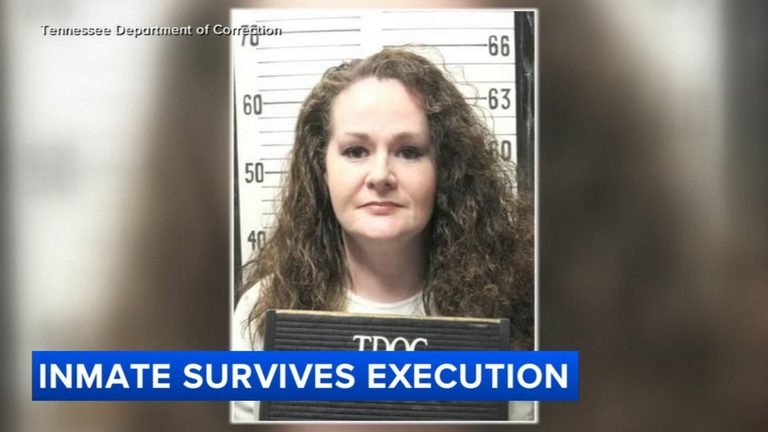
Governor Bill Lee announced Thursday that the state will pause all scheduled executions after a botched lethal‑injection attempt left death‑row inmate Christa Pike in critical condition. The governor ordered a third‑party review of the procedure and confirmed that the remaining execution slated for this year will not be carried out.
What happened during the execution
Witnesses reported that after two rounds of pentobarbital were administered, Pike continued to breathe and even snored loudly for more than an hour. Attorney Randy Spivey, representing Pike, told reporters that his client was “alive right now” and receiving life‑saving medical care. Spivey criticized the state’s handling of the execution, calling it “cruel” and “torturous” and arguing that the protocol failed to respect basic human dignity.
State response
Governor Lee said the Department of Correction followed the established protocol, but acknowledged that the outcome was different from any prior execution in Tennessee. “There is no one that wanted what happened last night to happen. It shouldn’t have happened,” Lee said. He emphasized that the investigation will answer the public’s questions about why the procedure deviated this time.
Lee also announced a temporary halt to all scheduled executions for the remainder of the year while the review is conducted. The governor stressed that the state must ensure that any future execution method upholds the Constitution’s prohibition on cruel and unusual punishment.
Political fallout
Republican U.S. Senator Marsha Blackburn, who is running for governor, used the incident to call for the reinstatement of the electric chair, arguing that a more reliable method is needed. Blackburn’s comments reflect a broader partisan debate over capital punishment methods in the South.
Critics of the execution, including several liberal Supreme Court justices, had already expressed concern. In a 6‑3 decision, the U.S. Supreme Court allowed the execution to proceed, but three justices dissented, warning that the case required careful appellate review given Pike’s claims of childhood sexual abuse and PTSD.
Legal background
Pike was convicted in 1996 of the 1995 murder of 19‑year‑old Colleen Slemmer. She has repeatedly argued that her history of sexual abuse and PTSD would make lethal injection a cruel and unusual punishment. The Tennessee Supreme Court rejected her claims, and the U.S. Supreme Court denied a stay of execution earlier this week.
Following the botched attempt, the Department of Correction’s warden, Kenneth Nelsen, argued that Pike’s claims had already been unsuccessfully presented and that the state has a strong interest in finality and victims’ closure. Victims’ family members have expressed a desire for closure, stating that the execution was long overdue.
Next steps
The third‑party review ordered by Governor Lee will examine the entire execution protocol, including drug administration, IV placement, and monitoring procedures. The review is expected to produce a report with recommendations for how Tennessee can safely and constitutionally carry out capital punishment, if the state chooses to continue the practice.
In the meantime, the governor’s decision to pause executions reflects a cautious approach that balances the state’s duty to enforce the law with the need to protect human dignity and avoid constitutional violations.
Original reporting: Allentown News – 6abc Philadelphia — read the source article.