About 19,000 borrowers in Tarrant County, or about 1 in 5, are at least 90 days behind on their federal student loans, according to an Associated Press analysis of federal data. This trend is concerning, especially for community colleges like Tarrant County College, which has the highest rate of late payments among local institutions.
Local Impact
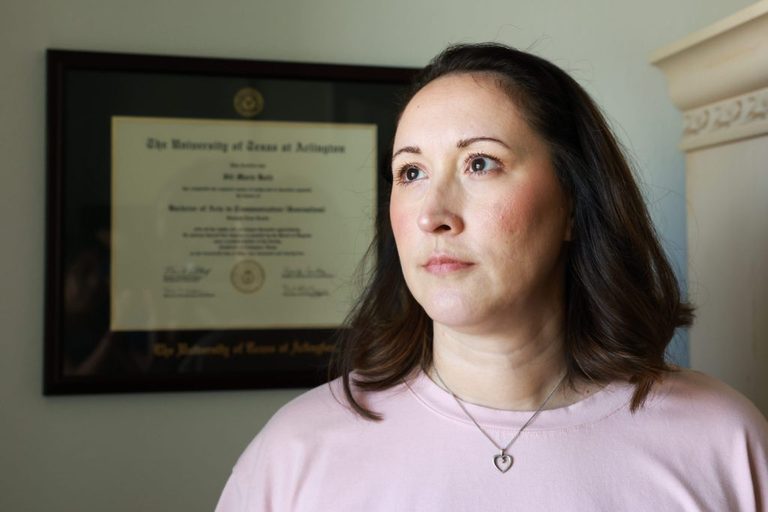
Jill Bold, a 43-year-old resident of Fort Worth, is one example of someone who has struggled with student loan debt. After returning to college in her 30s, Bold graduated from the University of Texas at Arlington in 2022 with a 4.0 GPA. However, health problems and an unpredictable job market made it difficult for her to find steady employment, putting her at risk of defaulting on her loans.
Fortunately, Bold’s husband’s steady job has helped her avoid default, but many others in Tarrant County have not been as lucky. The AP analysis found that about 3,500 borrowers who recently attended Tarrant County College were behind on their loan payments, which is more than 1 in 4 borrowers.
Expert Insights
Betsy Mayotte, president and founder of The Institute of Student Loan Advisors, attributes the surge in late payments to the end of pandemic-era protections. The federal government had paused most payments for over three years and provided a one-year “on-ramp” to prevent missed payments from leading to default. Once these protections ended, missed payments began to accumulate toward default.
Mayotte also notes that borrowers with smaller balances are often more likely to default, as they may not have received a degree and are therefore worse off than when they started. Federal data shows that borrowers who left college without a degree or certificate were nearly seven times as likely to default within six years of enrolling as those who completed their course of study.
Tarrant County College’s CFO, Pamela Anglin, cautions that falling behind on payments does not necessarily lead to default. The college counsels students before they borrow and as they leave, and Anglin estimates that about half of those behind on payments will avoid default.
Original reporting: Fort Worth Report — read the source article.