When Craig Kuhl and his wife Brooke traveled to the Bahamas for a wedding celebration, a short, routine scuba dive turned into a medical emergency. Within minutes of surfacing, Kuhl experienced a sudden loss of balance and weakness that doctors later identified as an arterial gas embolism—bubbles of gas that entered his bloodstream and traveled to his brain, producing symptoms identical to a stroke.
Emergency response and intensive care
Paramedics airlifted Kuhl to a Miami hospital, where he spent 25 days in the intensive care unit. During that time he lost roughly 40 pounds and was unable to move without assistance. The severity of the embolism left him paralyzed and dependent on a lift to get out of bed.
Rehabilitation at Tampa General Hospital
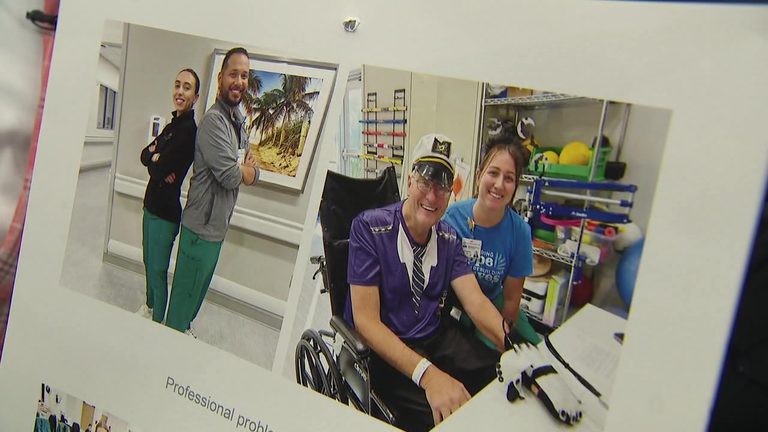
After his ICU stay, Kuhl was transferred to the TGH Rehabilitation Hospital in Tampa. There, Dr. Rigoberto Nunez, Medical Director of the Spinal Injury Program, oversaw a rigorous regimen of physical and occupational therapy. Kuhl described the early days as “a helpless feeling,” noting that he had to “come up from zero” and relearn basic movements such as walking, climbing stairs, and feeding himself.
Family and community support
Throughout the three‑week inpatient program, Kuhl’s wife Brooke was a constant presence, offering encouragement and celebrating each small milestone. “It was almost like that first session of that shower, his whole demeanor changed,” Brooke said, crediting the caring attention of the medical team and fellow patients for keeping him motivated.
Beyond the hospital walls, Kuhl received an outpouring of support from friends, family, and the broader Tampa community. Neighbors organized meal deliveries, and local volunteers visited the rehab unit to share stories and prayers, reinforcing the Christian principle of caring for those in need.
Progress and future plans
One year after the incident, Kuhl has made remarkable strides. He no longer uses a wheelchair, has returned to driving, and enjoys playing golf again—though he has chosen to give up scuba diving out of caution. The couple plans to visit the rehabilitation facility regularly, hoping to inspire other patients facing similar challenges.
What remains unknown
Medical experts have not yet determined why the arterial gas embolism occurred after an otherwise uneventful dive. The incident underscores the importance of thorough pre‑dive safety checks and rapid emergency response when rare complications arise.
Craig Kuhl’s story illustrates how a combination of advanced medical care, dedicated therapists, and a strong network of family and community can turn a near‑fatal event into a testimony of hope and resilience for Tampa residents.
Original reporting: Tampa Bay Florida News (HLL/CB) — read the source article.